The Christie’s specialist penile cancer service in Manchester presented new research and advanced robotic surgical techniques at the 2026 Annual Meeting of the Irish Society of Urology (ISU) in Killarney.
The meeting received a record 184 abstract submissions, with 100 selected for presentation. The Christie contributed work highlighting both the scale of its penile cancer research programme and its experience in minimally invasive lymph node surgery.
Large Christie study examines HPV and survival in penile cancer
One presentation analysed 800 patients with penile squamous cell carcinoma, bringing together expertise from The Christie’s urology and pathology teams.
The study examined differences between HPV-associated and HPV-independent disease and found that patients with p16-positive tumours had better overall survival than those with p16-negative cancers. The findings support the growing importance of tumour biology in understanding prognosis and developing more personalised, risk-stratified approaches to penile cancer treatment.
Robotic lymph node surgery and specialist training
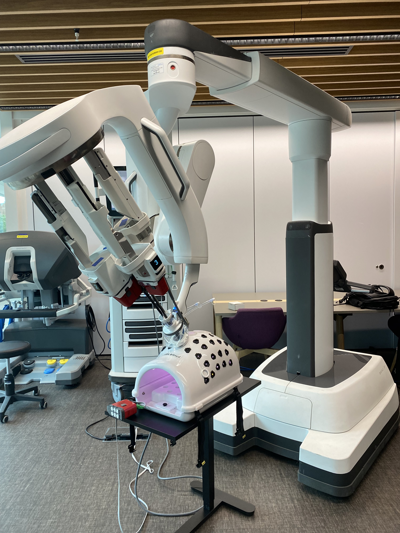
The team also presented its experience in robotic-assisted inguinal lymph node dissection (RAIL) for penile cancer.
Ken Patterson, who recently completed a specialist penile cancer fellowship at The Christie, presented a series of groin dissections that he performed independently, following a larger number of supervised procedures within The Christie’s established robotic programme.
His work was selected both as a surgical video and as an oral presentation. All independently performed procedures were completed robotically without conversion to open surgery, with no major postoperative complications reported.
The presentations demonstrate how The Christie combines a high-volume specialist penile cancer service with research, surgical innovation and structured fellowship training.
Mr Arie Parnham, Consultant Urological Surgeon at The Christie, said: “It was great to see both our research and robotic work represented at the meeting. The 800-patient study highlights the strength of our clinical and pathological data, while Ken’s presentations demonstrate the value of structured specialist training.
“His independent robotic cases followed a period of supervised operating within our much larger programme. Ultimately, this work is about improving outcomes for patients while continuing to develop expertise in penile cancer surgery.”