The Christie is the largest single site cancer centre in Europe and the first in the UK to be accredited as a comprehensive cancer centre.
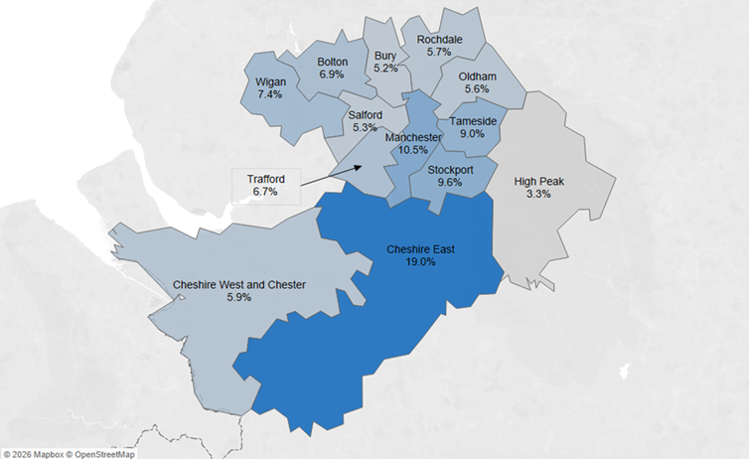
In 2025/26, almost 60,000 patients from across Greater Manchester and beyond attended one of our outpatient clinics. 83% of these patients lived in Greater Manchester, High Peak, or areas of Cheshire.
Gender
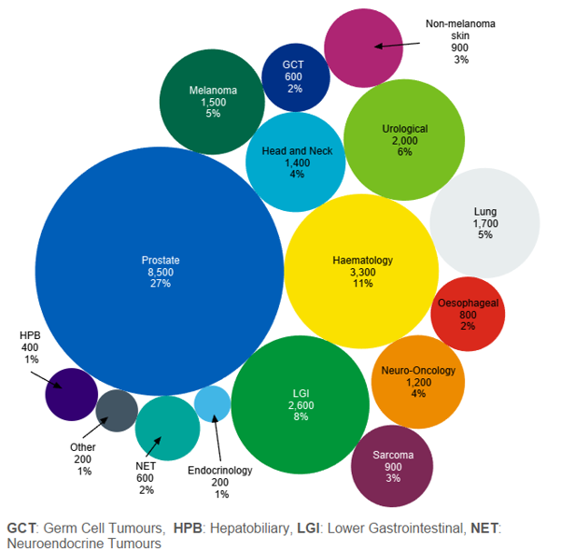
59,700 male and female patients attended at least one outpatient clinic appointment (new and follow up) this year. The most common cancers amongst patients cared for are prostate, breast, haematological and lower gastrointestinal (LGI) cancers. The average age of our patients is 63 years with 41% being 70+ years. In England, in 2023, over half (52%) of all new cancers were diagnosed in people aged 70 years and over, according to NHS England Cancer Registration Statistics.

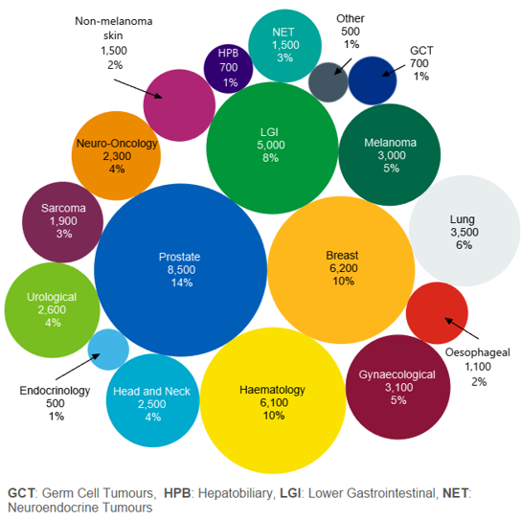
NB: Endocrinology may include patients receiving care for endocrinology related issues as well as endocrine cancers
Female patients
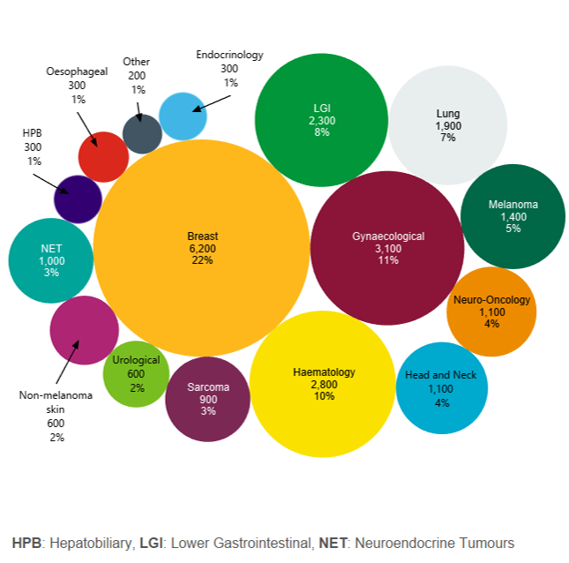
48% of the patients we care for are female, of whom 59% are 60 years or older. The most common cancers amongst the females we care for are breast and gynaecological.

Male patients
52% of the patients we care for are male, of whom 72% are 60 years or older. The most common cancers we care for across males are prostate and haematological.

Ethnicity
According to the ethnicity figures from the 2021 census and Gov.uk's UK population by ethnicity report, non-white minorities represent 23.6% of the Greater Manchester Population. 69% of our patients record themselves as "White British" and 6% classify themselves as one of the non-white ethnic minority categories.
The differences between our Christie population and the Greater Manchester population may, at least in part, be due to a lower level of ethnicity data capture for our ethnic minority patients.
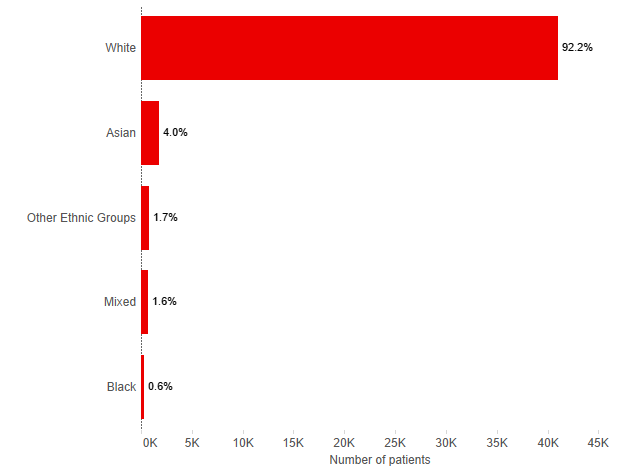
Ethnicity is known for 74.5% of patients. 8.4% of patients who we have a record for, declined to answer this question.
Religion
According to the 2021 UK census, the largest religious group in Greater Manchester is Christian who account for 47% of the population followed by Muslim with 13% of the population.
Among our current patients for whom we have religion recorded, 71% are Christian and 4% are Muslim, with 23% reporting having no religion. However, there is a significant proportion of patients who have not disclosed their religion, or who have not responded to the question of their religion when asked by the Trust.
 Religious belief is known for 62% of patients. Less than 1% of patients for who we have a record for declined to answer.
Sexuality
According to the 2021 census sexual orientation statistics, 3.1% of the UK population (aged 16 years and over) describe themselves as gay, lesbian, bisexual or other sexual orientation. Among our patients, less than 2% are recorded as being lesbian, gay or bisexual (LGBTQ). However, there is a significant proportion of patients who have not disclosed their sexuality, or who have not responded to the question of their sexuality when asked by the Trust.
 Sexuality is known for 9.4% of patients. Less than 1% of patients for who we have a record for declined to answer.
Deprivation
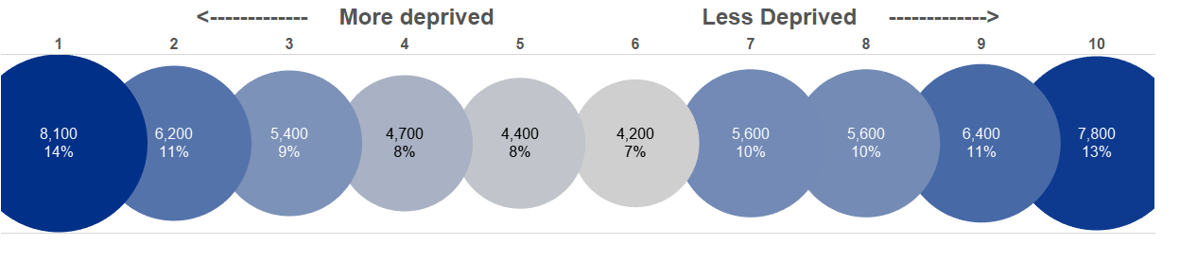
35% of our patients live in the most deprived areas of Greater Manchester. Our measure of deprivation is based on the 2019 Index of Multiple Deprivation (IMD). IMD is the official measure of relative deprivation for small areas in England. The IMD combines information from the 7 domains to produce an overall relative measure of deprivation (see the English Indices of Deprivation 2019 FAQs for more).
Clinical outcomes: 30-day mortality post systemic anti-cancer treatment (SACT)
The Christie has similar 30-day mortality post SACT to the national average for all 5 cancer types evaluated. This data is produced by NHS England using data submitted by all NHS providers in England each month. Data is currently only available for 5 cancer types (please note: these evaluations are based on very small numbers of deaths).
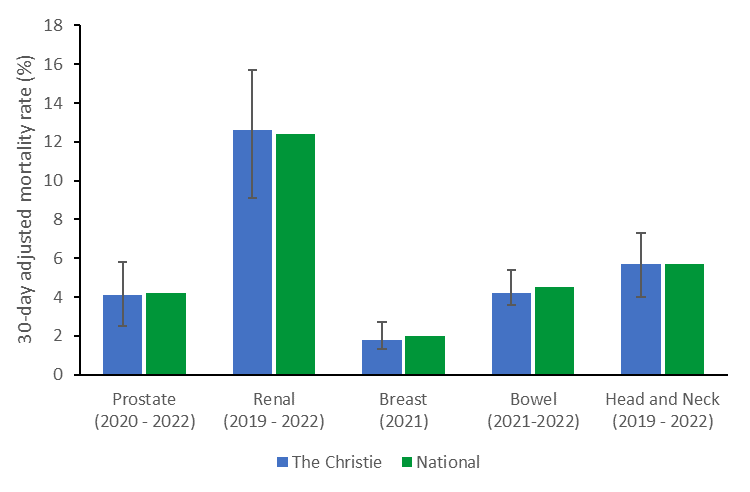
From the NDRS report 30-day mortality post-Systemic Anti-Cancer Therapy - Case-Mix Adjusted Rates - NDRS. The axis titles show the cancer being evaluated, and over what time period.
Methodology
The patient profile data was produced by the Clinical Outcomes and Data Unit (CODU) at The Christie NHS Foundation Trust. It has been created using data provided by NHS patients who had at least one outpatient clinic appointment at The Christie between April 2025 and March 2026. This includes new patients and those on treatment or follow-up.
Demographic data available here is predominantly generated from the ‘patient registration form’ provided to patients at the point of their first appointment at The Christie. The provision of these data by patients, at the point of registration, is optional. We also receive some data from general practitioners and other providers as part of the patient referral. Some protected characteristics, such as ethnicity, religion, disabilities and sexual orientation, have higher levels of missing data which is a recognized limitation of the information presented here.
The Christie is currently implementing several initiatives to improve the data collection process and engagement with all our patients.
Why are we asking for more information about you?
At The Christie, we want to make sure our care is the best it can be for everyone. To help us do that, we’re asking all patients to fully complete their registration form, called the contact and services form.
This includes patients who are new to The Christie, as well as those who have already visited us. Even if you’ve shared some of this information before, we may need to check that it’s up to date and complete.
What is the contact and services form?
This is a short registration form that asks about your background, including your age, sex, ethnic group, religion, sexual orientation and any disabilities. These are known as protected characteristics under the Equality Act 2010.
Why do you need this information?
Information on the contact and services form helps us understand who our patients are, so we can meet different needs and offer better support. It also helps us check that everyone is getting equal access to care and identify where improvements are needed.
Do I need to answer every question?
Yes. All questions must be completed, but if there’s something you’d prefer not to share, you can select ‘prefer not to say’. This lets us know you’ve made a choice, rather than leaving a question unanswered. It also means we won’t ask you again for that information.
Completing the form in full helps us keep your records accurate and provide more personalised, inclusive care. It also supports our legal responsibilities and follows NHS guidance on how this data should be collected.
Don’t you already have these details?
You may have filled out a similar form when registering with your GP or when you first came to The Christie.
However, we want to make sure the information we hold is current and accurate. Not all data from your GP is shared with us automatically, and some of it may have changed.
Patients with missing information will receive a text message linking to a secure form where they can update their protected characteristics.
We’re asking you directly so we can update your records and provide the best possible care.
Is my data safe?
Yes. Your information is stored securely and handled in line with NHS data protection rules, just like your medical records.
Why does it matter?
By completing the contact and services form, you’re helping us make our care better for everyone.
It might help us call you by the right name, tailor the information we send to suit you better, or make arrangements like providing an interpreter or accessible space when you visit.
Patient stories
Many patients tell us that sharing this information has helped them feel better supported. You can read some of their experiences below.
Winston's story
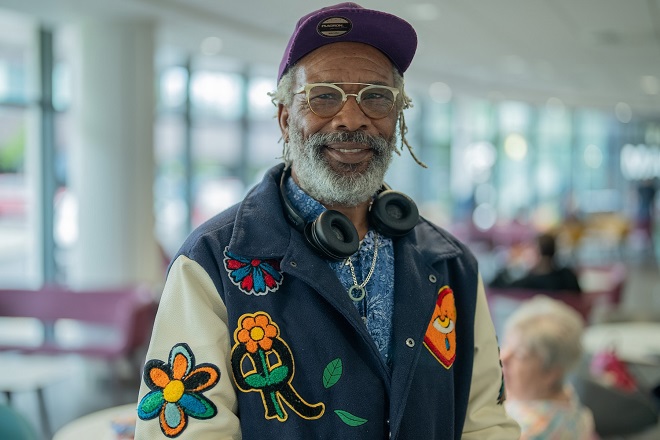
Winston Carrington was treated for prostate cancer at The Christie. He is also a member of our hospital, helping to develop and improve our services.
“Although there are obviously lots of similarities in the way people from different ethnic backgrounds experience cancer, there are also many differences. Black men, for example, are twice as likely to develop cancer than white men. Raising awareness of this is something I’m passionate about and I’ve been part of a campaign to encourage other black men to be more aware of their prostate health.
"Research from Cancer Research UK also tells us people from minority ethnic groups report worse experiences of cancer care and lower survival for some cancer types. By telling The Christie more about who you are, you are helping the team to better understand and address these issues, as well as provide better, more personalised care.”
Kat's story

Kat Watson-Wood had a brain tumour as a child and was treated with radiotherapy at The Christie. She still comes in for a check-up once a year.
“The treatment I had affected how part of my brain works and, as a result, I walk with a crutch and have problems with my memory.
"I’m proud of being disabled and am involved with the disability network at work so I can help others. It’s important that we share information about things like disability with The Christie team so they can make sure that the care they provide is as inclusive and accessible as possible.
"I’m also involved in research that’s looking at how we can minimise side effects in children having radiotherapy for brain tumours. Cancer affects different people in different ways, so by sharing your diversity data you could also be helping the team to understand what research is needed to make cancer treatment and care better for everyone.”