
When Ruth Roberts, 63, was diagnosed with chronic lymphocytic leukaemia (CLL), a type of blood cancer, The Christie was already a familiar place.
A scientist by background, Ruth completed her PhD at The Christie’s Withington site, working in the haematology research laboratories from 1984 to 1987. It was also where she met her husband, Andy, who was working in medical oncology just one floor up.
“The Christie is a happy place for me,” she says. “I know it well.”
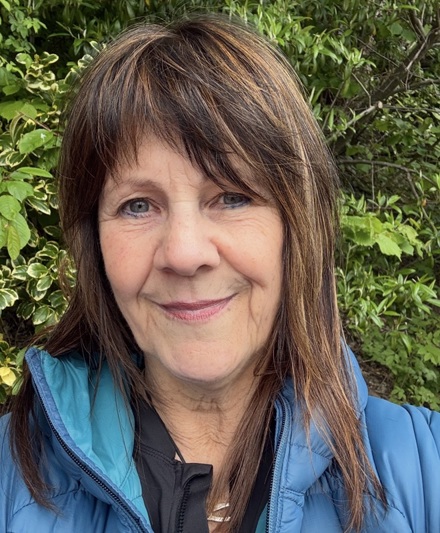
Years later, Ruth returned to The Christie, this time as a patient at the Macclesfield site.
Her dad had developed leukaemia in his 60s and, when Ruth began experiencing similar symptoms in her late 50s, she suspected something might be wrong. She noticed lumps on her neck and a prickly skin rash that came and went without explanation.
After requesting a full blood count, she was diagnosed with CLL in 2022.
Ruth was initially under active monitoring, without treatment, but when her condition began to progress she started targeted treatment (a course of specialised cancer drugs) at The Christie in May 2025. She began with ibrutinib, with venetoclax added three months later as part of a 15-month course designed to treat her CLL.
There were periods when treatment left Ruth nauseous, exhausted and very breathless. But when she felt able, she continued working and cycling, even riding from Wilmslow to her appointments – something she says became quite the talking point with her surprised clinical team.
“I kept cycling because I wanted to continue to do the things that keep me fit and well, both physically and mentally,” she says.
However, Ruth says that staying active was never about trying to prove she was unaffected by cancer.
“I was going cycling simply because I felt like doing that that day. If I got up and I felt poorly, I would’ve just stayed in bed.
“I think there’s a psychological balance between beating yourself up and trying too hard and genuinely doing the things that you can still do and focusing on what you can still do.”
This focus saw Ruth return to a goal she had set herself before starting treatment: cycling across France.
The original trip had been postponed, but during month 13 of the 15-month treatment, Ruth set off from Brittany in northern France and cycled to Nice in the south over two weeks.
Treatment, however, had made training a little more difficult than anticipated. There were moments of breathlessness, and the hills didn’t seem to be getting any easier.
So, she adapted.
“I thought, why don’t I focus on what I can do? I can cycle across France if I have a little bit of help from an e-road bike.”
The bike’s small electric motor gave Ruth an extra push when she needed it, while the organised tour provided support along the way. Ruth says she was open with the guides about her treatment, and they were happy to keep an eye on her throughout the trip.
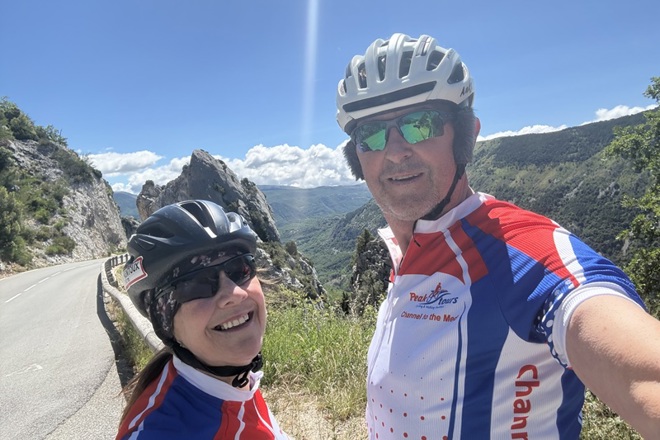
“I didn’t do this to prove a point about the cancer,” she says. “It was more, ‘I’ve always wanted to do this, and this isn’t going to stop me.’”
That didn’t mean ignoring what her body was telling her, though.
Ruth cancelled other trips when her immune system and blood counts made travelling unwise, and rested when she needed to.
“You can live well through treatment. You naturally do have to modify,” she says. “I think balancing pragmatism with positivity is the message.”
That same pragmatism shaped the way Ruth approached decisions about her treatment.
Following genetic testing, her consultant, Dr Faye Sharpley, talked her through several possible treatment options. Ruth ultimately chose a 15-month combination treatment but says one of the most important things she learned was that there wasn’t necessarily one “correct” choice.
Her genetic results didn’t point clearly towards one treatment over another, so Ruth’s own preferences became an important part of the decision. She preferred a more intensive period of treatment followed by a period of remission, rather than a gentler approach that would mean taking a tablet every day for the foreseeable future.
“When your consultant offers you options, they’re not waiting for you to pick the right one,” she says.
“They’re asking how you feel. We have a tendency to ask the doctor to tell us what to do, but sometimes you really are being presented with a choice.
“As patients, we have to make choices based on the available information and trust that the consultant has honestly given us everything that’s relevant.”
Ruth says her career in science also gave her a certain perspective on those conversations. After her time in academic cancer biology, she later joined AstraZeneca, becoming global head of regulatory safety.
In 2015, she and two colleagues used their shared expertise to set up a drug discovery and development company of their own, ApconiX.
What began with three people has since grown to around 110 staff.
“I absolutely love it,” Ruth says. “We have such a great time.”
Ruth finished treatment at the end of July this year and is now back to being monitored.
“The message is not to be redefined by the cancer and to remain who you are,” she says.
“Do the things that feel good for you. Know your limitations. And focus on what you can still do rather than what you can’t.”