
Press release posted 26 October 2026
Every day, over 1,000 families hear the words ‘you have cancer’. This is a 15% increase from the 1990s and is projected to increase by another 2% by 2040.
However, whilst cancer diagnoses are on the rise, survival rates are also getting better. In the 1970s, only 1 in 4 people survived a cancer diagnosis for more than 10 years. Today, it’s 1 in 2.
Progress such as this is thanks to researchers at the world leading Christie hospital in Manchester like Professor Samra Turajlić, Dr Kate Brown and Dr Marija Miletić, 3 researchers and clinicians working at The Christie to provide patients with kinder, gentler treatments designed to reduce the side effects associated with cancer therapy.
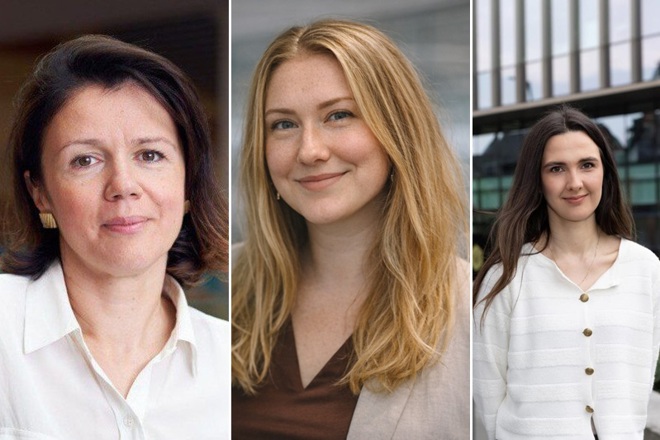
Originally from Watford with a PhD in Genetics from UCL, Dr Brown, aged 37, now lives in Stockport. Dr Brown has extensive experience designing and delivering clinical trials and is helping coordinate research that could transform how doctors understand and use immunotherapy; a type of cancer treatment that utilises the body’s immune system to identify and fight cancer cells and one of the most significant advances in cancer treatment in recent decades.
Working alongside her is fellow researcher Dr Marija Miletić. Dr Miletić is a medical oncologist from Dubrovnik, Croatia. Aged 36 now living in Manchester city centre, Dr Miletić has dedicated her career to improving outcomes for people living with cancer. Her work includes helping to deliver research studies in clinical practice while continuing to care for patients as a medical oncologist.
And leading the research is Professor Samra Turajlić. Professor Turajlić is the Director of Cancer Research UK Manchester Institute, a Consultant Medical Oncologist at The Christie and leads the Cancer Dynamics research group. Professor Turajlić leads work that aims to predict how individual cancers behave by studying how they evolve, with the ultimate aim of using this knowledge to improve outcomes for patients.
Together, Dr Brown, Dr Miletić and Professor Turajlić represent the growing number of women leading the charge in cancer care. By combining their expertise in research, clinical trials and patient treatment, they're tackling some of the biggest unanswered questions in cancer research.
All 3 are part of the reason we are getting better at diagnosing, treating and managing cancer through the MANIFEST Study.
While treatments continue to improve, we still don't fully understand why certain therapy options work for some patients but not others. That is the focus of Professor Turajlić, Dr Brown and Dr Miletić’s research.
Dr Brown said “The MANIFEST study is trying to answer a fundamental question: what is happening inside the body during immunotherapy, and why? Some patients can experience significant side effects even while the treatment is still working. We want to understand the biology behind both positive and negative responses so that in future we can better predict who will benefit most and who may need additional support.”
By collecting samples and information from thousands of patients receiving immunotherapy, Dr Miletić and Dr Brown hope to identify the biological clues (biomarkers) that could revolutionise cancer care. Dr Miletić believes the ambition and unprecedented scale of the MANIFEST study, which is part of the broader MANIFEST Platform, is exactly what is needed to make a breakthrough.
"We hope to answer some of the biggest unanswered questions in immunotherapy. Our ultimate goal is to identify biomarkers that can help us understand which treatment is most likely to benefit each patient and who may be at risk of developing side effects. Learning from every patient who takes part, we also hope to uncover new therapeutic targets and help guide the development of the next generation of immunotherapies. Ultimately, this is why we do what we do - to help every patient receive the treatment that gives them the best possible chance of living longer and living better."
Sarah Phillips, aged 28 from Sale, was diagnosed with breast cancer following the discovery of a lump in her breast in 2026. Sarah was found to have had the same genetic mutation as her mother who was diagnosed in 2012, a mutation which increases the likelihood of breast cancer developing. When speaking with Dr Miletić, Sarah was keen to take part in the study to support future cancer patients.
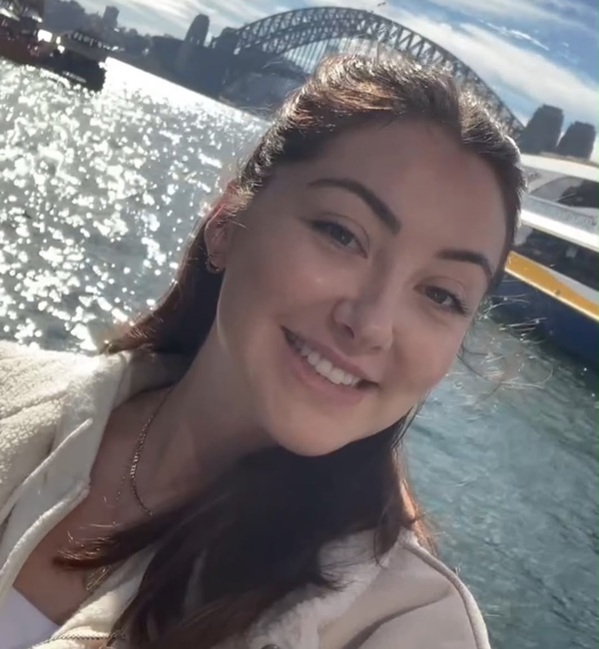
Sarah said: "We have come a very long way. Without cancer research, the treatment I'm on now just wouldn't exist. It's only here because somebody before me agreed to take part in trials and studies. I only need to look back to when my mum was treated to see that we're treating cancers today that in my lifetime would have been treated in a completely different way and with completely different side effects. That progress comes from the research and from people supporting it.
"We're so lucky to have The Christie hospital on our doorstep, and to have a charity that puts so much financial support into research for the future generations.”
Both Dr Brown and Dr Miletić’s roles are funded by The Christie Charity, support they say is crucial to the success of cancer research.
For Dr Brown; “It’s a badge of honour. To have The Christie Charity fund this post is a real validation of the work, the impact and the meaningfulness of what we’re trying to do. We simply cannot continue to find new ways to address cancer without funding, and without The Christie Charity I wouldn’t be here in this role.”
For Dr Miletić; "I'm incredibly grateful to The Christie Charity and everyone who supports it. I feel incredibly privileged that they chose to fund my role and gave me the opportunity to contribute to research that could change the future of cancer care. Without their support, research of this scale and ambition simply wouldn't be possible."
Research such as this is central to The Christie Charity's commitment to supporting The Christie hospital’s vision of ‘learning from every patient’ and trebling the number of patients participating in research by 2030. Studies have shown that cancer patients treated at research-intensive hospitals have better outcomes than those treated in hospitals with little or no research activity. The Charity has pledged to support and fund this goal with £30m over the next four years to accelerate research and innovation in Manchester.
To support the work of The Christie Charity, please go to Donate today or ring 0161 446 3988.
The Christie Charity supports the work of The Christie NHS Foundation Trust providing enhanced services over and above what the NHS funds. This includes money for care and treatment, research, education, and extra patient services. Gifts from the public make a huge difference to the care and treatment that The Christie is able to provide to cancer patients and their families.