
We are The Christie magazine - Edition 6
Read the latest edition of our staff and patient magazine, including a feature on an innovative Minecraft project for younger patients and a story on artist on patient Kymara Akinpelumi.
Read our staff and patient magazine below.
The name of this magazine - We are The Christie - was chosen to reflect the togetherness here at The Christie. We believe this is a place where everyone’s voice is valued, and we want this new publication to showcase that.
In the latest edition, you’ll be able to read about happenings from around the Trust. Stories include how we're transforming cancer care through Future Christie, patient and staff stories and how the proton beam therapy centre at The Christie is using Minecraft to help some young patients prepare for cancer treatment.
Read the latest edition of our staff and patient magazine, including a feature on an innovative Minecraft project for younger patients and a story on artist on patient Kymara Akinpelumi.

Read our staff and patient magazine, featuring stories including a feature on our 'Act with Kindness' staff awards and a focus on our apprenticeships.

Read the autumn edition of our staff and patient magazine, featuring stories including the new patient portal and an insight into our smoking cessation service.

Read the summer edition of our staff and patient magazine, featuring stories including VR therapy and a focus on The Christie garden.
Joining The Christie as both Chair and a patient has given me a unique perspective on this remarkable organisation.
I started here in May 2025, after more than 20 years in NHS leadership. What I didn’t anticipate was experiencing the Trust from such a personal, first-hand perspective, following a diagnosis of prostate cancer just two days after being appointed.
As Chair, my role is to help guide the board, looking ahead while listening to our patients and staff. Spending time in waiting rooms and treatment areas gave me the chance to speak to patients and families and hear directly about what matters most to them. It also reinforced how important it is that the care we provide is not just excellent but also personal, and as easy to access as possible - something that is very much our priority.
In these pages of our sixth edition, you’ll find stories that reflect these priorities, from using Minecraft to help young patients feel more prepared for treatment, to how our Future Christie programme is improving patients’ experience with easier to access information. I’m also particularly pleased to see examples of services delivering care closer to home, including our clinical haematology service at Leighton Hospital.
Now that I’m back on my feet, I’m looking forward to seeing even more of our services and our visitors - continuing to listen and to learn.
Professor Joe Rafferty
Chair
2 well-loved staff members, Julie Davies and Lorraine Burgess, retired recently.
Lorraine had a remarkable 51-year NHS career, including 14 years at The Christie. In 2013, she became the UK’s first Macmillan dementia nurse consultant in a specialist cancer centre, helping transform care for patients living with both cancer and dementia. Lorraine supported families, improved staff understanding, and developed dementia-friendly services. Her work was recognised nationally, winning the Nursing Times Nurse of the Year award in 2014 and being named as a Queen’s Nurse.
Julie spent almost 4 decades at The Christie and has led The Christie at Oldham since it opened in 2010. She helped build the service, bringing cancer treatment and care closer to home for many people. Over her career, she also contributed to developments in radiotherapy research and innovation.
Both leave a legacy and will be greatly missed.
The Christie celebrated a fantastic night at the Greater Manchester Cancer Awards, taking home five awards recognising our work in research, innovation, education and equality.
Winners included the RAPID-RT trial, which won the Commitment to Equality Award, and the proton beam therapy team, which won the Innovation Award for its use of virtual reality distraction therapy to support children and young people during treatment. Dr Sindhu Retnabai also received the Spark of Excellence Staff Award for her compassionate advocacy for teenagers and young adults with cancer.
The Trust was also recognised for work improving oesophageal cancer detection in Kenya, and in Educational Impact for Digital Clinical Placements – the Manchester Model.
The results have been published in The Lancet, one of the world’s leading medical journals. The TORPEdO trial found that standard intensity-modulated radiotherapy (IMRT) is as effective as proton beam therapy for treating oropharyngeal cancer, a type of throat cancer.
Professor David Thomson, the Christie consultant who led the trial, said: “Long-term outcomes with IMRT were very good and matched proton beam therapy. We are extremely grateful to the patients and multidisciplinary teams who made this trial possible. IMRT is widely available and delivers excellent patient outcomes. Proton beam therapy also plays an important role in cancer care. The treatment is standard of care for several groups, including children and young adults.”
Our Withington site restaurant will undergo a refresh in the second half of this year, to improve the whole dining experience. This will include a new entrance, increased seating, a new outdoor terrace, more service and till points to reduce queues at busy times, and an increased ‘grab and go’ concept for those buying lunch in a hurry.
Work is due to start over the summer and does unfortunately mean the restaurant will be reducing services. We hope to unveil our brand-new facilities by the end of this year.
Sam Birchall, lead guitarist in indie band The Lilacs, is believed to be the first person in Europe to go home the same day after a lymph node removal operation for testicular cancer that had spread.
Sam was diagnosed last year at the age of 24. After surgery at his local hospital, he had three cycles of chemotherapy at The Christie before further tests showed he needed an operation to remove enlarged abdominal lymph nodes. The procedure was carried out robotically by Mr Aziz Gulamhusein, Consultant Urological Surgeon at The Christie.
Sam said: “I had a robotic operation, which generally has a much shorter recovery time than open surgery, but I never expected to leave hospital the same day. It really couldn’t have gone any better.”
Mr Gulamhusein said the milestone was “amazing” and showed how less invasive surgery can help patients recover more quickly.
Young patients at The Christie are using Minecraft to help them prepare for cancer treatment, thanks to an innovative collaboration with Microsoft and Minecraft Education.
A virtual version of the proton beam therapy centre has been carefully recreated in Minecraft, giving children and young people the chance to explore what they will experience during treatment. It is believed to be the first time a working NHS facility has been brought to life in this way.
The project has been developed with input from clinical teams and health play specialists at The Christie, who support children to understand their treatment in ways that feel familiar and less overwhelming.
By exploring spaces such as reception areas, waiting areas, treatment rooms and scanners in Minecraft, patients can build confidence, ask questions, and feel more in control during what can be an uncertain time.
Each year, The Christie treats around 120 children with proton beam therapy, a highly targeted form of radiotherapy. It uses protons, tiny particles found in atoms, to deliver radiation precisely to a tumour, helping to protect healthy tissue and reduce side effects. For many families, the scale and complexity of the treatment environment can feel daunting at first.
The Minecraft world has been designed to reflect real patient journeys as closely as possible. Children can move through the centre, interact with equipment, and even discover playful features such as hidden rooms and a keyboard piano. The environment has been scaled up to make it easier to navigate, while still being recognisable to those attending for treatment.
Ten-year-old Ramatulaye, known as Rama, was the first patient to try it. She said: “It looks just the same as the hospital, it’s so cool. The centre feels very big when you get here, so being able to explore it in Minecraft helps you to understand where everything is, which is great. I think other children will love it just as much as me.”
Sessions are supported by the health play team, who guide each child through the experience and use it to start conversations about treatment. The aim is not only to reduce anxiety, but to help children feel more prepared and involved in their care.
Proton beam therapy centre manager at The Christie, Tom Edwards, said: “Having seen through my own children how fascinated they are by Minecraft, I knew that this would be a fantastic way for our young patients to explore the proton beam centre and overcome their fears. That’s why I was so excited to work with the Minecraft developers to help them build a version of our proton beam therapy centre in Minecraft.”
The project attracted widespread media attention when Rama first used it. She featured on the BBC News website and the children’s programme Newsround, and it was covered on BBC Radio 5 Live and North West Tonight, as well as in the Daily Express.
You can watch the Newsround video by visiting bbc.co.uk/newsround and searching for ‘Minecraft Christie cancer centre’.
Rama’s visit to explore our proton beam therapy centre in Minecraft was part of a wider moment in the national spotlight, as The Christie worked with BBC Radio 5 Live on a special ‘Day of Hope’.
Ahead of World Cancer Day and alongside the launch of the government’s National Cancer Plan, the BBC spent time at our hospital to understand how we are improving the lives of people with cancer.
Across BBC Radio 5 Live, Newsround, BBC News online, and regional BBC TV and radio, audiences heard about pioneering research, our supportive care service, and listened to several of our consultants being interviewed.
Alongside Rama’s story, the BBC visited the Paterson Building to explore groundbreaking research aimed at better understanding and treating pseudomyxoma peritonei (PMP) – a rare appendix cancer.
Professor Omer Aziz and research fellow Rags Nagaraju shared how they are working to better understand and treat PMP, growing patients’ tumours outside the body, and analysing mutations with a view to developing more personalised and effective treatments in the future.
Professor Aziz said: “The chance to shine a light on a rare tumour type that receives little national attention was a great opportunity and an important thing to do.”
Supportive care was also a key focus. Professor Richard Berman spoke on Radio 5 Live about the role of supportive oncology in helping people live as well as possible with cancer.
Professor Fiona Thistlethwaite was also part of the programming, discussing early-phase clinical trials and the importance of research in offering new hope to patients. She had treated the BBC presenter Rachael Bland, who was the driving force behind the powerful BBC podcast ‘You, Me and the Big C’.
The BBC’s ‘Day of Hope’ was created to celebrate the legacy of the podcast, and they asked Professor Thistlethwaite about Rachael and the impact the podcast has had on patients and people like her working in cancer care.
At the heart of the coverage, however, was Rama’s experience with Minecraft. Her story demonstrates how innovative approaches at The Christie, such as helping children explore treatment through play, can make a big difference in how they feel about treatment.
In total, The Christie was mentioned on the BBC more than 200 times in one day, reaching millions of people across the UK.
Roxy works as part of the team providing medical support to children receiving proton beam therapy, for example, helping to manage complicated or unexpected side effects during treatment.
Roxy has been at The Christie for around two years now, having previously worked in public health and in neonatal health. She said: “Before I joined the NHS, I’d had quite a varied career. I’d done all sorts, from marketing to acting and even working as cabin crew. When I started training as a nurse, I knew I’d found my vocation.”
One of Roxy’s big passions is racial equality - from both a staff and a patient perspective. She is the engagement lead for the REACH staff network group (race, ethnicity, and cultural heritage), bringing her experiences both personally and professionally to raise awareness about how someone’s race, ethnicity and culture can have a profound impact on their experience in the NHS.
She said: “Over the years, there have been some improvements, but ethnic minority patients still face issues with their care that put them at a disadvantage. Black and Asian women, for example, are proven to have higher mortality issues during pregnancy and childbirth and in cancer care there are many cultural barriers that can impact upon someone’s experience, for example, during early detection and screening.”
Roxy believes it’s vital to celebrate diversity, and that staff from different backgrounds improve the care we offer because of their lived experiences and the knowledge they have of different cultures. She said: “It’s important to celebrate our differences, ask questions and have open discussions about how we can learn from different cultures. When we understand the issues that our colleagues and patients face, we can take action to improve our interactions with others and promote equality.”
Debra Jones has been an occupational therapist (OT) for over 30 years. She currently works with teenage and young adult patients going through cancer treatment at The Christie.
“Not very many people know what an occupational therapist does,” Debra says. “The way I describe it is that we find out what is important to someone – whether that be having a shower, getting back to university or being able to stand independently – and, with the support of others in the team, rehab, self-management strategies, and sometimes specialist equipment, help them to do it.”
Debra, who was an international gymnast when she was younger, was always keen on a career in healthcare but decided to become an OT after seeing the difference that her school friend’s mum made to people’s lives.
She’s worked in a lot of different settings, including end-of-life care, and set up the rheumatology service at Salford Royal. She joined The Christie team in spring 2024.
“I’d gotten to the point where I was looking for something new from my career,” Debra says. “My son was a teenager at the time, and I’d had experience of working with cancer patients, so I decided to give it a go, and I haven’t looked back since.”
Debra had to delay starting her new job for a year while she went through treatment for breast cancer.
“It was a bit of a role reversal to come to the hospital as a patient rather than to start my new job, but I got first-hand experience of just how brilliant everyone is,” she says. “Going through treatment also gave me a bit of insight into what our young people go through.
“I really love this job. We take a holistic approach to care and patients might work with physios, complementary therapists, clinical psychologists, youth support co-ordinators, speech and language therapists and dietitians during their treatment, alongside doctors and nurses. Working closely with my colleagues to improve young people’s health and wellbeing truly is a privilege,” Debra adds.
Barbara Parker, known to colleagues and patients as Babs, has worked at The Christie for 30 years and is a PA and medical secretary within the medical oncology lung team.
“Every day is extremely busy,” Barbara says. “When I arrive in the office, I hit the ground running. My phone starts to ring soon after 8am. Priorities change all the time, so you’re always adapting and dealing with what can be complex and time-consuming tasks.”
Barbara manages clinic changes and consultants’ appointments, responds to calls and emails from patients and family members, types up patient notes and handles a wide range of requests. A big part of her role involves liaising across services to make sure things happen when they need to. “I’m always multitasking,” she explains. “Ultimately, it’s about making sure that the patient’s needs are met.”
For many patients and families, Barbara is one of the first points of contact. That often means speaking to people when they are worried, overwhelmed or dealing with difficult news. “Being the first point of contact is a privilege,” she says. “I’ve built strong relationships with patients and family members who feel confident about contacting me because they know they can depend on me.”
Over the years, Barbara has seen the impact of her role. “I’ve received many heartfelt thank you cards and emails from patients and their family members. I feel this shows that I do make a difference.”
She describes how administrative professionals serve as the link between consultants, nurses, patients and their families. “If we didn’t do our jobs professionally and effectively, the system simply wouldn’t work. We’re an essential part of the team, supporting and reassuring patients between their visits.”
Her connection to The Christie is also personal, having been a patient here herself. “I have insight from both sides,” she says. “Now, being able to support patients through their own cancer journey means a lot to me.”
Kieran Metcalfe was treated for bowel cancer at The Christie for two years before sadly dying last year. In the last 11 weeks of his life, he was cared for as an inpatient by the team on ward 12.
His wife Susie recently came back to The Christie with a special gift for the people who looked after her husband and the whole family during the most difficult time of their lives.
“Kieran was a talented photographer, so I brought some of his prints to the people who looked after him with such warmth, compassion and care. He had some of his pictures in his room at The Christie, and he knew I was going to donate some of his prints to the ward. The team had become like family to us, and I wanted to leave a memory of him with them,” she says.
His work is also raising money to help other patients. “We had a Thanksgiving service for him and displayed many of his prints in exchange for a donation and our sons and Kieran’s goddaughter raised money by doing the Manchester Marathon. We’ve raised around £15,000 for The Christie Charity and Maggie’s Manchester so far. I posted about it on his social media and have had so many lovely comments from people all over the world. He meant a lot to so many people,” Susie adds.
“Photography was a big part of who Kieran was. It was his way to escape his desk when working from home. If he was in a bit of a grump, I’d suggest he went out with his camera, usually to the Peak District, and he always came back refreshed.”
“His photographs are brilliant and bring joy to so many people, just like the man himself.”
Do you have a story to share? We’d love to hear from you, please get in touch with our team at the-christie.press.office@nhs.net
At The Christie, we’re proud to celebrate the incredible contributions of our staff and volunteers through our You Made a Difference Awards. Here are our recent winners.
The Christie is marking one year since taking on the clinical haematology service at Leighton Hospital, bringing care closer to patients across mid and south Cheshire.
Since April 2025, patients have continued to receive their treatment locally in Crewe, supported by a dedicated team of consultant haematologists, advanced clinical practitioners and clinical nurse specialists based at Leighton Hospital.
One of those patients is Sharan Bannaghan, a hairdresser from Sandbach. She was first diagnosed with Hodgkin lymphoma in 2023 and went into remission, before being diagnosed again in 2025. Following further treatment, including a stem cell transplant at The Christie in Withington, her most recent scan has shown no evidence of cancer.
Sharan now attends Leighton Hospital every 6 weeks for follow-up care. She said: “My experience at Leighton has been amazing. My consultant, Dr Georgina Talbot, is fantastic and has made this experience much easier to deal with. All the staff are warm and friendly, and the chemotherapy nurses really put me at ease at such a stressful time.”
Over the past year, the team has delivered around 1,000 new outpatient appointments and 10,000 follow-ups, alongside more than 3,500 treatments.
For more than 3 decades, Jacqui Stringer has helped transform cancer care at The Christie through integrative therapies.
Jacqui joined The Christie in the early 1990s, working on the adult leukaemia unit. At that time, patients receiving chemotherapy often spent weeks in isolation, with limited contact and significant physical and emotional strain.
She began exploring whether approaches such as massage and touch could reduce symptoms, including pain, anxiety and muscle cramps. “At the start, complementary therapies were seen as a nice extra. But for some patients, they are not optional. They can be an integral part of helping them through treatment safely.”
What began as a small, nurse-led initiative grew into a pioneering integrative therapy service. Working with clinical and microbiology colleagues, Jacqui ensured that treatments using essential oils were evidence-based, carefully risk-assessed and aligned with clinical governance - demonstrating that integrative therapies could stabilise some patients enough for cancer treatment to go ahead. Today, The Christie’s integrative therapy service is internationally recognised.
Reflecting on her career, Jacqui said: “Cancer treatment is incredibly challenging. Making that journey more manageable for patients, that is what matters most.”
Patients who may benefit from integrative therapy can ask their clinical team about referral options.
The Christie Institute for Cancer Education has developed an innovative approach to workforce learning through digital clinical placements, known as the Manchester model.
Over the past 5 years, the programme has connected cancer experts with 5,000 learners and delivered over 10,000 placement weeks. It supports nurses and allied health professionals across various specialities, helping widen access to cancer education and reduce inequalities in learning opportunities.
Grounded in trauma-informed coaching, the model recognises how personal experience can shape the care people provide. Developed with input from patients, professionals and wider stakeholders, it focuses on inclusion, wellbeing and the full cancer care pathway.
The work was also recognised at this year’s Greater Manchester Cancer Awards, winning the Educational Impact award.
A retired nurse is benefitting from a new way of receiving cancer treatment that takes minutes instead of hours.
Rosemary Andrew was diagnosed with kidney cancer in June 2022 after experiencing symptoms including blood in her urine, weight loss, and tiredness. She had surgery to remove a kidney and was referred to The Christie for ongoing treatment.
Rosemary began immunotherapy, initially delivered through a drip into a vein, which could take at least an hour. Since November 2025, she has been receiving nivolumab as a quick injection under the skin at Dr Kershaw’s Hospice in Royton. Her appointment now takes around 10 minutes.
“It’s faster and more convenient. It means less time in a clinical setting and more time doing the things I relish, including volunteering with Age UK, reading, watching football and spending time with my family,” she says.
Rosemary, who has 2 daughters, 3 grandchildren and 3 great-granddaughters, continues to respond well to treatment. Her latest scan shows no measurable disease. “I feel very lucky to be under The Christie’s care.”
Future Christie is our long-term programme to improve how we deliver cancer care at The Christie, bringing together changes to systems, technology and ways of working to support both patients and staff.
It is a phased programme, with different elements being introduced and developed over time. The aim is simple, to make care more responsive and more personalised, while supporting staff to deliver the best possible care. And some of these changes are already starting to be seen by patients.
One of the most visible developments is MyChristie, our secure online health account. More patients are now using MyChristie to view appointment details, clinic letters and other key information.
Much of what can be found in MyChristie is also now integrated with the NHS App, meaning many patients can see their Christie appointments alongside information from other NHS services.
Work is continuing to expand the number of appointments available and to improve how information is shared, helping patients feel more informed.
Alongside this, digital treatment reviews have been introduced for some patients receiving chemotherapy and immunotherapy. These allow patients to report how they are feeling between appointments, helping teams respond earlier if support is needed.
Another important development is the introduction of ambient voice technology, a digital notetaker that supports clinicians by capturing conversations during appointments and turning them into structured clinical notes and summaries.
This technology is being used in some clinics, with clinicians reviewing and editing all outputs. The aim is to support conversations, improve the clarity of information for patients, and reduce administrative workload.
Future Christie is not just about technology. It is also about how these changes are introduced in practice, with support and training for staff, and ongoing feedback from patients helping to shape what comes next.
To help bring these changes to life, we have launched a new video series, Future Christie and me. These short films share real experiences from patients and staff, showing how new approaches can make a difference in day-to-day care.
The first videos feature Professor Adrian Bloor, alongside patient stories from Lynn Thompson and Robin Edwards, who speak about the importance of clear information, feeling supported, and having confidence in their care.
New videos will be released regularly throughout the year on our website and social media channels.
Future Christie will continue to develop over the coming years, with further improvements planned, including a new electronic patient record and better use of data to support care.
Throughout, our focus remains the same, to support patients with clear information and high-quality care, and to support staff with the tools and systems they need to deliver it.
A renowned artist has used her experience as a patient at The Christie as inspiration for an award-winning self-portrait.
Kymara Akinpelumi has a background in photography and has had her work displayed in the National Portrait Gallery and on billboards throughout the UK. Working primarily through self-portraiture and photo essays, her images are autobiographical, intimate and effective.
Kymara was diagnosed with cancer in 2019, which hugely affected her life as a young person who enjoyed sport. As a former county netball player and coach, Kymara was disheartened by her lack of strength after treatment, not recognising herself or her appearance. During this time, her sister, Kaitlyn, was still able to push her body to the limits through competitive running.
Kaitlyn encouraged Kymara to also use running as a source of healing and, on her first community run, Kymara was brought to tears by her sister’s encouragement. Kymara used Kaitlyn as a mirror before cancer, creating an emotional self-portrait of the two sisters together.
She said: “Watching my sister able to push her body reminds me of my blood and DNA, and what I’m capable of. Because of Kaitlyn, I want to reclaim my body, to give it the love and strength it deserves. She’s my role model.”
This joint self-portrait displays the sisterly relationship of the two, Kymara leaning on Kaitlyn as a beacon of power. She hopes the work will encourage other young patients to focus on building an active life after cancer, despite the challenges treatment brings.
We need a state-of-the-art scanning centre. Together, we can build it.
Every breakthrough in cancer care starts with the right technology, the right expertise and the right support.
Thanks to the incredible generosity of our Charity supporters, we continue to invest in pioneering research, world-class facilities and life-changing care that will shape the future of cancer treatment for generations to come.
Now, we’re embarking on one of the most ambitious developments in The Christie’s history: the creation of a state-of-the-art scanning centre on Wilmslow Road.
Advanced scanning technology plays a vital role in diagnosing cancer earlier, planning treatment more precisely and monitoring patients throughout their care. It gives clinicians the detailed insight they need to make faster, more informed decisions, helping to improve outcomes and save lives.
Nearly every patient treated at The Christie will require a CT scan at some stage of their treatment. For many, access to the very latest imaging technology can make a life-changing difference.
The current scanning centre at The Christie was built in 1980 and must be brought in line with other elements of the hospital.
The new scanning centre, due to be operational in 2029, will transform the experience for patients and staff alike, providing a modern, purpose-built facility with more space, cutting-edge equipment and the capability to support groundbreaking research that could revolutionise cancer diagnosis and treatment. It will also house an advanced 4D CT scanner which is significantly faster and more accurate than existing technology.
To make this vision a reality, The Christie Charity needs your support.
To help raise awareness and vital funds for the appeal, The Christie Charity is proud to launch a major 3-year media partnership with the biggest news outlet in the North West, the Manchester Evening News (MEN). The MEN will be throwing its weight behind dedicated campaign coverage to communities across the region. All funds raised through the appeal will go directly towards building the new scanning centre.
We’re also delighted to be working with Transport for Greater Manchester, who will help share the campaign across buses and trams throughout the city.
Together, we can continue to transform cancer care for patients now and in the future.
To donate, visit the scanning centre page on The Christie Charity website or one of our Charity centres in Withington or Macclesfield.
Welcome to the winter edition of We are The Christie.
2025 was a year defined by progress and real teamwork across our Trust. We’re pleased to share some examples of this in these pages, including our radiotherapy clinical trials team being named ‘UK Radiography Team of the Year’ by the Society of Radiographers, and a feature on Ian Rutherford, winner of our patient-nominated ‘Act with Kindness’ award. These sit within a wider year of clinical milestones, expanding services, and continued advances in research and education.
As always, we highlight the people who make The Christie special – our patients and our colleagues.
This issue also looks ahead at some exciting innovations coming to the Trust. As part of our Future Christie transformation programme, we’re preparing to introduce ambient voice technology (AVT), a digital note-taker or ‘scribe’ that will help improve the patient experience and support clinical teams. More is planned throughout 2026, and we'll keep you updated across all of our channels.
Our successes are only possible because of all colleagues across the Trust, and I’m grateful to everyone who has contributed to the care we provide.
Thank you for reading.
Dr Neil Bayman
Executive Medical Director
5 of our executive assistants recently received the ‘Unsung Hero’ award at The National PA Awards in Manchester.
The team were originally nominated by service manager and line manager Paulette Eckersley for the ‘Stronger Together’ category. After reviewing the nomination, judges felt the team’s story deserved wider recognition and created a brand-new award to acknowledge their commitment and outstanding teamwork.
“I’ve only been managing and leading the team at The Christie since June, but from day one, I could see they were deserving of this award. They’ve faced significant challenges in recent months, yet they’ve consistently supported each other and delivered exceptional service to the executive team. I’m so proud to see them recognised in this way, —they truly deserve it,” Paulette says.
As part of our Future Christie modernisation programme, we are introducing ambient voice technology (AVT) - a digital note-taker - to help make patient appointments clearer and more efficient.
AVT is a secure tool that listens during a consultation and helps create an accurate written summary of what was discussed. Clinicians check everything before it is saved, and the conversation with the clinical team remains the most important part of the appointment.
Using AVT means clinicians can spend less time typing notes and more time focusing on patients. It also means patients will receive a clear written summary sooner, helping them remember what was agreed and share information with their GP.
As Adrian Bloor, our Medical Director for Future Christie, says: “At its heart, this innovation is about freeing up time to care.”
AVT launched with consultants in selected areas in early 2026 and will now be gradually introduced across the hospital, ensuring all the right support is in place.
Christie researchers went to Berlin in October for the European Society for Medical Oncology annual meeting, one of the world’s most prestigious cancer research conferences.
In total, they were involved in over 30 presentations and poster sessions covering everything from early-phase trial results and patient-reported outcomes to resilience in oncology professionals and basic and translational research.
Some of the highlights include Gemma Jones, one of our senior nurses, speaking about electronic patient-reported outcomes in streamlining pre-treatment assessment, and Dr Andrew Clamp presenting overall survival analysis of the ICON8B trial as part of the gynaecological cancer session.
Congratulations also go to Professor Fiona Thistlethwaite and Dr Colin Lindsay, who both won awards for posters they presented at the conference.
The Christie has hosted 3 groups of cancer clinicians from Ukraine over the last few months.
It’s part of a partnership with the National Cancer Institute of Ukraine, and the visitors are spending time with Christie teams in their respective fields – radiotherapy, surgery, and medical oncology – as well as sharing their own experiences of delivering cancer care in extremely difficult circumstances back home.
The visits are happening under the International Medical Partnership initiative and the UK-Ukraine 100 Year Partnership Treaty and are funded by Global Health Partnerships.
Dr Zubir Ahmed MP, Health Minister, visited the hospital on 18 December to meet the Ukrainian and Christie teams and find out more about the difference the partnership is making.
The Christie was recently featured in a three-part documentary series about ground-breaking cancer research that’s happening across the UK.
Episode 3 focuses on Professor Caroline Dive, Director of the Cancer Research UK National Biomarker Centre, which is based at our Withington site.
She and her team of experts from Cancer Research UK, The University of Manchester and The Christie are developing innovative blood tests to detect cancer, looking for tiny fragments of cancer DNA in the blood that give them a lot of information about how and when to treat it.
Through her work, we meet mechanic Lee, who is being treated for cancer of unknown primary at The Christie. Doctors can’t find where his cancer started. Could Caroline’s pioneering blood tests help? The programme also focuses on patient Damian, who hopes to join a trial to test if his recent skin cancer could be coming back, so he can move on with family life.
You can stream ‘Cancer Detectives: Finding the Cures’ now on Channel 4.
Ian Rutherford, who works in our car parking team, was chosen as the ‘Act with Kindness’ winner at our annual 2025 Christie Colleague Awards.
Ian’s nomination came from a patient’s daughter, Heather Harrison, who described him as ‘kind, professional and caring’.
“Ian is the first person we see when we come to The Christie,” Heather says. “We travel quite a way to get there, and he’s always there to welcome us and help us get parked. He’s out there come rain or shine but always takes time out of his day to come and have a chat.
“Ian’s been the one consistent person who has made our journey easier. He must see hundreds of people a day, but he always offers his time and kindness. He’s inclusive, kind, and always goes the extra mile. Overall, he’s just a fabulous human being. I can’t express how grateful I am for the difference he’s made.”
Heather first met Ian on her father’s very first visit to The Christie. “We couldn’t get parked and had travelled over 30 miles to attend,” she says. “Ian got us parked within minutes. Since the first meeting, at a time that was difficult for us all, he has been consistent. Every time I have seen him at drop off or parking, he takes a couple of minutes from his day to talk to me, my mum and dad and asks us how we are.”
Ian was one of 80 colleagues or teams nominated for the ‘Act with Kindness’ award. Thank you to everyone who took the time to tell us about those people who have made a difference during their time at The Christie.
At the ceremony, Ian was joined by dozens of other colleagues who were nominated in other categories like ‘Clinical Team of the Year’, ‘Learner of the Year’, and ‘Innovation and Improvement.’
With over 4,000 colleagues caring for 60,000 people every year, there are so many brilliant things going on every day – the awards ceremony really is just the tip of the iceberg.
Everyone at The Christie has a role to play in caring for patients and their loved ones. Ian’s story is a powerful reminder that kindness can start long before a clinical appointment begins.
At The Christie, we support staff to reach their full potential. Apprenticeships are one way we achieve this.
With National Apprenticeship Week taking place from 9 to 15 February 2026, we thought it’d be fitting to highlight how apprenticeships at The Christie can help build confidence and long-term careers.
An apprenticeship is a paid job that combines formal learning and assessment, leading to recognised qualifications.
4 of our colleagues, Suzanne Lagan, Abbey Walker, Leah Hutchison-Saxon and Brian Hall share their experiences of apprenticeships at The Christie. They discuss how the opportunity to gain qualifications and develop practical skills has advanced their careers.
In April 2025, Suzanne Lagan qualified as a fully registered diagnostic radiographer at The Christie, marking the culmination of more than a decade of learning, much of which was supported by the Trust.
Suzanne began her career in beauty therapy, but her interest in anatomy and physiology led her to pursue a healthcare career. A careers open day at The Christie in 2010 led to a week’s placement in radiotherapy. Inspired, Suzanne researched further and realised that diagnostic imaging might be where her strengths lay.
In 2011, she joined The Christie as a radiographic aide, subsequently gaining 9 years of experience in CT and ultrasound. “I was fascinated by how image quality could influence someone’s diagnosis or treatment plan and the clinical decisions that impact patient care,” she recalls.
Undiagnosed dyslexia and a lack of GCSEs in maths and English initially held her back, but The Christie supported her to complete the Care Certificate and an NVQ Level 3 in healthcare in 2016. This support enabled her to apply for further training, and in 2019, she became the first person in diagnostic radiology at The Christie to take the assistant practitioner apprenticeship route.
“I had a house, a family, and bills to pay,” she says. “Full-time university wasn’t an option. The apprenticeship meant I could earn and gain qualifications at the same time.”
With encouragement from clinical tutors and colleagues, she completed the 2-year programme and then a further 18 months of study to become a fully qualified radiographer in April 2025.
Now working across X-ray, CT and interventional radiology, Suzanne is thriving. “It’s a big step up, but I was ready for it,” she says. “The Christie helped me build the skills and confidence I needed.”
Her manager, Sarah Simpson, says: “Suzanne is an outstanding example of what’s possible when someone with passion and commitment is given the right environment to grow. She’s overcome barriers with remarkable resilience.”
Suzanne is mentoring student radiographers and hopes to inspire others. “If you're interested in healthcare, especially imaging, don’t let fears about age, background or study put you off,” she says. “The Christie will support you every step of the way.”
Abbey Walker joined The Christie in March 2020 as one of the first business administration apprentices in the clinical trials coordinator team.
With a background ranging from nursery work to payroll and accounts in a cheese factory, Abbey saw the apprenticeship as an opportunity to step into a meaningful specialist role.
Inspired by her dad’s stem cell transplant treatment for multiple myeloma, Abbey seized the chance to learn on the job while gaining qualifications. “I’ve always preferred learning on the job,” she says.
Her apprenticeship earned her a level 3 business administration qualification and a level 2 qualification in medical terminology. By 2023, she was promoted to a senior clinical trials coordinator secondment, later expanding into project management across the lymphoma and haematology research teams.
One of Abbey's most significant challenges was adapting to the project manager role and learning new skills such as building an electronic database. She is now in her second year of a project management degree apprenticeship with the University of Cumbria.
Abbey credits her development to the exceptional support of her colleagues and managers, particularly her initial line manager, Juliet Harris, who nurtured her confidence. She enjoys the variety of her work and the opportunity to make a difference.
Leah began her Christie journey in 2019 as a healthcare assistant in clinical trials. After a decade in HR, she longed for a more people-focused role.
Seeing a nursing associate apprenticeship advertised rekindled her childhood dream of becoming a nurse. This hands-on route allowed her to earn while learning, thereby removing financial barriers that had previously held her back from attending university.
After completing the apprenticeship, Leah was encouraged to apply for one of just 3 places on the top-up registered nurse apprenticeship. To her delight, she was accepted and is now qualified as a registered nurse, working as a theatre practitioner in surgical oncology theatres.
Leah credits her success to the support of colleagues in endocrinology and the unwavering guidance and encouragement she received from Yvonne Rushton, who managed her as a nursing associate.
Leah values being there for patients at vulnerable moments. She hopes to inspire others to “grab the opportunity and believe in themselves”.
Brian Hall, one of our pharmacy assistants, was named ‘Health and Science Apprentice of the Year 2025’ at the Preston College Awards.
Brian joined The Christie nearly 6 years ago, starting out in the catering team, but always with a plan. “My intention was to do 12 months in the kitchen and then work my way onto the wards,” he explains. Despite progressing to head chef, Brian knew he wanted a more patient-facing role. “When the apprentice opportunity came up in pharmacy, I just went for it,” he says.
Now working in the pharmacy team, Brian supports ward and patient top-ups and dispensing between departments, while studying towards his qualification. Returning to education was a big step. “It was a bit daunting going back into education. I hadn’t done academic work for years,” he says. “But I’ve had great support from the team, and I’m really enjoying it.”
Reflecting on his role, Brian adds: “I’m happiest when I’m in a role where I’m helping others. I’ve never once woken up and thought, ‘I don’t fancy going in today.’ That says it all really.”
We offer apprenticeships in:
Apprenticeships are available from level 2 (GCSE equivalent) to level 6 (degree level).
Apprentices need to undertake 6 hours of off-the-job learning per week, and have the approval of their manager prior to applying.
For more information, email the-christie.apprenticeships@nhs.net.
Megan Davies is part of The Christie’s 3D technology team, working on how digital tools, such as 3D scanning and 3D printing, could support clinicians and improve patient experience.
Megan studied 3D design at Manchester Metropolitan University, later completing an MSc in Digital Design and Manufacturing, where she explored how 3D technology can be used in a healthcare context. She joined The Christie to help develop new digital solutions that could enhance patient care.
A key part of her work focuses on early development and testing. “Right now, our work is helping lay the foundations for future patient-facing solutions.
We’re testing how 3D scanning and printing might help us create personalised medical devices, such as shielding masks and brachytherapy applicators – devices used to help deliver treatment more accurately and comfortably. Patient education is also an area we can help with, by printing anatomical models for patients and their clinicians to plan and explain a procedure,” she says.
Supporting colleagues is central to their work too. “We’re here as a resource for any clinician or team who thinks 3D technology might help improve their current workflow,” Megan says. “We’re encouraging staff to come to us with ideas that we can prototype, test and evaluate to see what’s possible. We will help teams across The Christie to innovate safely and efficiently.”
For Megan, the most rewarding part of her work is seeing design and engineering directly support patient care. “What I enjoy most about my role is the mix of creativity and clinical purpose. Being able to use my traditional design background, and additive manufacturing knowledge and apply them clinically. It’s incredibly rewarding to be in a multidisciplinary space where engineering, design and patient care meet.”
Louise Anderson, a 56-year-old swimming teacher and a school support assistant, has been living with chronic lymphocytic leukaemia (CLL) – a type of blood cancer – for nearly 9 years.
Louise, or ‘Nannie’ as she’s known to her 2 grandchildren, lives with her dog, a Border Terrier called Angus, in Macclesfield. She has taught swimming to children and adults for 23 years and worked in secondary education for 20 years. Although CLL is highly treatable and many patients will go through long periods of remission, it’s not completely curable, something Louise found difficult to deal with at first.
“I didn’t need any treatment – just monitoring – for the first couple of years after my diagnosis. I’m a practical person, so I found that difficult as there was nothing I could do. CLL is a bit different to some other cancers in that I’ll never be fully rid of it, which some people find hard to understand.”
Louise loves staying active and busy. In addition to working 2 jobs, she also enjoys cycling and swimming, and is studying for a degree in Childhood and Youth Studies with the Open University.
She also loves travelling and recently spent a few weeks in Kefalonia volunteering with a turtle conservation project.
“Being active and travelling enriches my mental wellbeing and my life as a whole. Dr Faye Sharpley, my consultant at The Christie at Macclesfield, has been brilliant in understanding this and helping me achieve as much as I can. I had to go back on treatment a few months before I went to Greece, but I told her I was going to do it, and she was fully supportive. We worked together to make sure that I was ready to go.
“I had the best time in Greece. We were up early each morning, cycling the 7 miles to the beach to look out for any nests that had been made overnight. Once we’d found one, we’d measure and mark the area to stop people from accidentally destroying it.
“I’m now on my second line of treatment, which is a daily pill, so I was able to keep taking that while I was out there. I had a couple of dips when I started taking it, but it’s got better, and I hope it stays that way.
“The trip was physically challenging, but I did it, and I’m very proud of that. It did wonders for my physical and mental health. When you have cancer, being able to feel like yourself and to do the things you love is so important to your overall wellbeing. It’s made a massive difference to me,” Louise says.
Do you have a story to share? We’d love to hear from you, please get in touch with our team at the-christie.press.office@nhs.net
At The Christie, we’re proud to celebrate the incredible contributions of our staff and volunteers through our You Made a Difference Awards. Here are our recent winners.
Congratulations to all our winners for their exceptional work and the positive impact they continue to have on The Christie community. Please visit our for You Made a Difference Awards page for more details and nominations.
It’s 15 years since the Oak Road Treatment Centre (ORTC) opened, and 2 colleagues who have been there from the start have been reflecting on how systemic anti-cancer therapy (SACT) services have grown to support more patients and increasingly complex care at The Christie. Since opening in 2010, the centre is estimated to have delivered around 550,000 treatments, including chemotherapy, immunotherapy and clinical trial care.
Maxine Neville has worked at ORTC since it opened and has seen that growth first-hand. “We used to schedule standard treatments only, but now we schedule complex regimes for around twice as many patients, and the team has grown to 25 schedulers,” she says. She adds: “Despite the increase in activity, we still take the time to help each other. That’s what teams are about.”
Supporting patients remains central to the work of the unit. Rhona Johnson, senior SACT clinical educator, recalls helping a patient who was worried that treatment would prevent her from attending a family wedding. “I spoke to the doctors and arranged for her to come the following week instead, so she could enjoy the wedding in Ireland,” she says.
Despite changes in treatments and technology, Rhona says the experience for patients has remained constant. “One thing I noticed when I started at The Christie was the ‘family feel’ it had. Patients often comment on this, and say they feel listened to here, and that as nurses we really do care. This has been the way since my first day.”
The courtyard garden at The Christie at Oldham has been given a new lease of life, just in time for spring.
It’s been beautifully transformed into a peaceful and accessible space for patients, colleagues and visitors to enjoy.
Funded by a grant from The William Dean Countryside and Educational Trust, the garden now features improved wheelchair access and vibrant planting designed to bring colour and calm all year round.
The new garden was officially opened by the Mayor and Lady Mayoress of Oldham, and it is already being enjoyed again by patients visiting the centre.
The Christie at Oldham delivers around 17,000 radiotherapy treatments every year, helping patients across Greater Manchester receive world-class cancer care closer to home.
CAR-T therapy is a type of immunotherapy that is transforming survival prospects for certain patients with blood cancers like lymphoma and leukaemia.
However, many experience severe overreactions, including Cytokine Release Syndrome, which can be potentially life-threatening.
Dr Jon Lim and his team at The Christie and The University of Manchester are working to change this. Building on 30 years of worldwide research, the RISE study aims to help patients better tolerate cutting-edge immunotherapy treatments like CAR-T.
The £8m programme plans to recruit up to 100 patients over five years and includes £3.4m in funding from the Medical Research Council, alongside industry support.
Dr Lim says: “Funding of this scale is rare, and we’re grateful for the opportunity. It reflects both the complexity of the challenge and the shared hope that this work can genuinely improve patients’ lives.
“RISE brings together experts from across Manchester to understand how new cancer immunotherapies work, and why they sometimes cause serious side effects. Our ambition is to position the UK as a global leader in research focused on the safe delivery of cell therapies.”
Appendix cancer researchers at the Manchester Cancer Research Centre – a partnership between The Christie, Cancer Research UK and The University of Manchester – have received a £105k grant from The Christie Charity to develop a blood test that could detect appendix tumours before they appear on a scan.
The grant is part of The Christie 2030 Research Programme, the Charity’s commitment to invest £30 million in cancer research by 2030.
Dr Raghavendar Nagaraju (Rags), Honorary Research Fellow at The Christie, and his team have collected blood and tumour samples from more than 250 patients.
The funding will help researchers assess how effective this blood test is, by showing whether it can provide the same key information as a physical tumour sample. The team is looking for two things: the unique ‘fingerprint’ of an appendix tumour, and fragments of tumour DNA that can reveal specific mutations.
“The Christie is one of only 2 hospitals in the country to treat appendix tumours, so to get this money from our own charity means a lot,” Rags says.
“Treatment for appendix tumours hasn’t changed in decades, and by doing this work, we are looking at a way of spotting this rare cancer quicker and in a less invasive way.
“This is a collaborative project between scientists, clinicians and patients who have very kindly gifted us their blood and tissue so we can improve outcomes for other people like them in the future.”
As patients and staff mark the fourth anniversary of The Christie at Macclesfield, one of the centre’s key successes has been the frailty service, which supports older, more vulnerable patients.
With around 23% of the local population aged over 65, the Macclesfield team recognised the need to improve outcomes and experiences for patients with frailty.
Led by Dr Victoria Lavin, consultant clinical oncologist, and Amanda Morley, cancer care co-ordinator, the service has supported more than 200 patients.
Patients may have additional needs alongside their cancer diagnosis, such as other health conditions, physical or cognitive decline, complexities caused by numerous medications, or caring responsibilities.
A simple frailty score helps identify patients who are referred for a holistic assessment. Most commonly, patients are signposted to support within the centre or referred to community services including physiotherapy, occupational therapy and social care.
The service is helping patients maintain independence, complete their cancer treatment and avoid hospital admissions. An audit showed that 93% of frail patients completed all planned radiotherapy, and 61% completed two or more cycles of chemotherapy.
Looking ahead, the service will expand in 2026 to provide enhanced support for patients with more complex frailty needs.
The Christie Charity has partnered with a new exhibition in Manchester this spring featuring more than 200 reimagined works by the acclaimed street artist Banksy.
‘The Mystery of Banksy – A Genius Mind’ opens on 13 March 2026 at Depot Mayfield in Manchester city centre and runs until 5 July 2026.
The exhibition includes an interactive collection of graffiti, photographs, sculptures, video installations and prints, exclusively reproduced for this special show. A video screen will also highlight key stages of Banksy’s renowned career.
Manchester will be the first UK destination for the global exhibition, which has already welcomed more than 3.5 million visitors across 36 cities worldwide. Visitors can see recreations of some of Banksy’s most iconic works, including Girl With Balloon, Devolved Parliament, a fully ‘Banksified’ London Underground carriage, and a towering seven-foot elephant installation.
The Christie Charity will receive funds from ‘tap to donate’ points around the exhibition, alongside a dedicated charity event on 14 April, sponsored by The DDC Group. DDC Group Founder and Chairman, Jan Trevalyan, is a long-term supporter of The Christie Charity.
NHS staff can save 18% with an exclusive Blue Light ticket offer, valid for up to two tickets. Family and concession tickets are also available.
For more information and tickets, visit The Mystery of Banksy – A Genius Mind.
Nearly every Christie patient will have a CT scan at some point during their treatment. For many, precise treatment planning can mean the difference between life and death.
Our current CT department is no longer fit for purpose. When it was built in 1980, it saw around 20 patients a day. Today, it is one of the busiest departments in the hospital, seeing more than 15,000 patients each year.
We urgently need to build a modern scanning centre to house an advanced 4D CT scanner. This next-generation scanner is faster and more accurate than existing technology. It captures the movement of both tumours and surrounding organs, helping clinicians see how this affects tumour position. This is particularly important for treating cancers near organs that move, such as the heart and lungs.
The new centre will be located on Wilmslow Road opposite Cotton Lane.
Professor Jon Bell, Clinical Director of Radiology, said: “This development will enable us to deliver world-leading care for every Christie patient. Providing the latest imaging equipment isn’t just an upgrade, it’s an investment in precision, life and hope.”
Scanning plays a vital role in cancer treatment, but we can’t do this alone. By supporting our new scanning centre appeal, you can help transform care for patients now and in the future.
To donate, visit the scanning centre page on The Christie Charity website or one of our Charity centres in Withington or Macclesfield.
Hello and welcome to the autumn edition of We Are The Christie.
This magazine is all about the people who make our Trust what it is. Inside you’ll find stories from patients, families, colleagues and volunteers that show the difference care and compassion can make.
I’d like to use this opportunity to tell you a little about Future Christie, our 10-year programme to improve how we deliver care. The aim is simple: to make life easier for patients and staff by introducing better technology, more joined-up services and new ways of working.
You’ll read in this issue about MyChristie, our new patient portal, which is already giving patients easier access to information about their care. Looking ahead, we’re exploring how artificial intelligence could assist with things like radiotherapy planning or consultation transcriptions, developing a new electronic patient record to join up care across the hospital, and using data more effectively to improve services.
Future Christie is not about changing what makes The Christie special. It’s about building on our strengths so that we can continue to deliver outstanding cancer care for many years to come.
Thank you for reading and for being part of our community.
Tom Thornber
Director of Future Christie
For the first time in our 125-year history, The Christie has delivered more than 100,000 chemotherapy and immunotherapy treatments in a single year.
Between April 2024 and March 2025, staff provided 105,827 treatments to over 14,000 patients.
Gemma Jones, Lead Nurse for Systemic Anti-Cancer Therapy, said: “Despite these record numbers, our colleagues still aim to provide the highest standards of compassion and care for the people they treat.”
Patient Suzanne Lackin, who received the milestone 100,000th treatment, added: “I have never been treated as a number. I feel so lucky and grateful to have this incredible place on my doorstep.”
The Christie has launched Future Christie, a 10-year programme to make care more personal, efficient and joined-up while keeping the same compassionate touch we’re known for.
One of the first changes is MyChristie, our new patient portal, which is now live and giving patients easier access to appointments and information.
Future developments include linking the portal with the NHS App, new digital tools to help patients share how they’re feeling between treatments and using artificial intelligence for smarter radiotherapy planning and meeting recordings.
Work has also begun on a new electronic patient record system to give staff the full picture of each patient’s care.
The Christie has been re-accredited by the Organisation of European Cancer Institutes (OECI), once again being recognised as a comprehensive cancer centre. The OECI is a network of Europe’s top cancer centres, focused on improving care, research and education.
Following a peer review earlier this year, the OECI highlighted The Christie as a leading example for both patient care and research, noting significant progress since the last review.
Our Christie Institute of Cancer Education was also praised for its extensive training programmes reaching healthcare professionals across the UK.
The report highlighted our motivated staff, patient-centred care, and the impact of our research. This re-accreditation, valid until 2030, reaffirms the Trust’s role as a leader in integrated cancer care and innovation.
After more than 3 decades at The Christie, Advanced Practitioner Karen Johnson retired on 10 October 2025.
She joined as a ward nurse in 1991 and went on to become The Christie’s first advanced practitioner. In this role, she has shaped modern oncology nursing, blending clinical excellence with innovation in service development to deliver outstanding patient-centred care.
Karen has often been the first clinician a patient will meet at The Christie and can remain their point of contact throughout treatment and follow-up, for 5 years or longer.
Her clinical expertise and care are deeply valued by the gynaecology team and by her patients.
Today, because of Karen’s pioneering journey, The Christie has 75 qualified advanced practitioners and 26 in training, supporting almost all clinical areas. The advanced practitioner career pathway is now open to all health professionals, not just nurses.
The latest Care Quality Commission inpatient survey shows that patients continue to rate their experience at The Christie among the best in the country.
Patients gave an overall experience score of 9.2 out of 10, an improvement on last year, placing The Christie third nationally. We were also one of just eight trusts recognised as an outlier for having a high number of scores rated ‘much better than expected’.
Patients scored us highly for dignity and respect (9.7), cleanliness (9.6), confidence in doctors (9.7) and privacy (9.9).
Vicky Sharples, Chief Nurse and Executive Director of Quality, said: “This year’s survey shows that patients continue to have a very positive experience of care at The Christie, which is something we never take for granted.”
We recently launched MyChristie, a secure online portal that gives patients quick and easy access to important information about their care – anytime, anywhere, on any device.
With MyChristie, patients can check upcoming appointments, view clinical letters and update their care team using a simple online health questionnaire. The launch is part of Future Christie, our 10-year transformation programme designed to make care more personal, joined-up and efficient, while keeping the same compassionate touch that The Christie is known for.
Tom Thornber, Director of Future Christie, said: “MyChristie is about giving patients more control and making care easier to navigate. It’s a positive step that will help people feel informed about their treatment. There’s more to come.”
More than 1,000 patients signed up during launch week, including Paul Mills, 55, from Warrington, who was supported by Oladipo Oni, one of our digital trainers.
Paul said: “I think MyChristie is really useful and it’s important that everyone knows more about it. It can be easy to lose focus when you’re a patient, so having someone to show you how to use the portal is really very helpful. I’ve completed my questionnaire already and I know it will be helpful going forward to keep appointments and my health history in one place.”
Oladipo added: “Patients will sometimes miss letters, so it’s helpful to have practical updates and appointments in one place. People told me it was good to be able to add dates to their personal calendars.”
This is just the start. MyChristie is in its first phase, with more features planned in the months ahead. These include access to blood results, CT and MRI appointments, and integration with the NHS App.
The launch has been supported by digital trainers in outpatient areas, along with help desks and information leaflets to guide patients through the sign-up process. Patients also receive invitations to sign up to the portal via text message.
Future Christie is about making life easier for patients and staff by reducing delays, improving communication and giving patients more control. MyChristie is the first step in this journey.
The Christie has recently introduced Martha’s Rule, a new patient safety initiative that gives patients and families a clear way to raise urgent concerns if they feel someone’s condition is getting worse while staying on one of our inpatient wards.
The initiative is being rolled out across the NHS, and The Christie was among the first hospitals to pilot the initiative.
Martha’s Rule is named after 13-year-old Martha Mills, whose sepsis symptoms were not recognised by medical staff in time to save her life in 2023. Her parents, Merope Mills and Paul Laity, have since campaigned for these important changes in the NHS.
The aim is simple – to make sure health concerns are acted on quickly, and that patients and families always feel listened to.
We caught up with oncology nurse and Martha’s Rule project manager Gabi Cohen, who led on the implementation at The Christie.
Gabi said: “Martha’s Rule is about making sure concerns are acted on quickly. It’s a simple way for patients or relatives to raise a concern if they feel it hasn’t been fully picked up on the ward.”
She explained that the process is designed to build on existing communication – “if you’re staying in hospital and you feel your health, or the health of your relative, is getting worse, you should first speak to your ward team and your consultant’s team. If you still don’t feel your concerns are being acted on, you can raise a Martha’s Rule call by phoning switchboard. This will allow our specialist team to review the patient promptly.”
The Christie was chosen as one of the first pilot sites because of its strong 24-hour critical care outreach team. “We have a really well-established outreach team here, and that’s what made us eligible to be part of the national pilot. We’ve also had support from colleagues across Greater Manchester to share ideas and make sure we’re introducing it in the best way for our patients,” Gabi said.
She added that the initiative should be seen as an added safeguard: “We already have good systems in place for escalating concerns. Martha’s Rule is that extra layer. It gives patients and families more reassurance that their voices will always be heard.”
For Gabi, leading the work has been a rewarding experience. “I’ve really enjoyed it because it’s allowed me to work with teams across the hospital that I might not normally link up with. Most of all, it feels positive to know this could make a real difference to inpatients and their families.”
Martha’s Rule is now live at The Christie and available 24 hours a day, 7 days a week. Patients and families who need to use it can ask the ward for details or call switchboard directly on 0161 446 3000.
All the information about Martha’s Rule here at The Christie is available on our Martha’s Rule: detecting deterioration page.
In order to be able to diagnose and treat cancer effectively, it is vital our experts at The Christie have access to the latest scanning and pathology facilities, so they can see the full impact of a patient’s disease and plan how best it can be treated.
To make the most of huge improvements in technology in recent years and an increasing demand in activity, we now need to improve both our current pathology and scanning facilities, many of which were built in the 1980s or even earlier and will not support future demand and technological advances.
We will therefore soon be starting an ambitious programme to construct two new buildings on Wilmslow Road to make this happen. These impressive new facilities will replace some of the oldest parts of our hospital as well as the temporary structures we have been using in recent years.
The first to be built will be our new Christie Pathology Partnership Building aiming for completion early 2027. The Christie Charity is funding this project. The construction will be managed by Northern Pathology Developments Limited which is a wholly-owned subsidiary of The Christie Charity. This allows The Charity to continue its vital support of The Christie NHS Foundation Trust, providing funding for enhanced treatment and care beyond what the NHS funds.
This will then enable us to demolish part of the hospital and begin work to build The Christie Scanning Centre and will open in 2029.
These new facilities will be a major step forward in the care we can provide, allowing us all to benefit from the latest technologies as they are developed,
helping us diagnose and treat a patient’s cancer as accurately and efficiently as possible.
These 3 projects are among the most ambitious we’ve ever embarked on at The Christie but will inevitably mean a period of significant disruption for our patients, staff and neighbours.
There will be a complex series of departmental moves within the hospital site, which are being carefully planned to ensure clinical services are at the heart of the hospital and meet the needs of our patients and staff who deliver them. As ever with our building projects, we will do our utmost to keep this disruption to a minimum and keep those affected informed and involved every step of the way.
At a time when the NHS is under significant financial pressures, we are very fortunate to have the support of The Christie Charity which will be launching a significant fundraising appeal to part fund this project.
We thank all our staff, patients and neighbours for their patience and support during this ambitious project for The Christie which will future proof many of the services we are able to provide, in turn helping us give our patients the very best and latest care.
Oladipo Oni is a digital trainer at The Christie. He joined the Trust in May 2024 and is part of the team helping colleagues build confidence with digital tools.
Oladipo’s journey into digital skills began far from Manchester, at a bootcamp in Nigeria where he was part of a community non-profit organisation that trained more than 3,000 young people in essential digital tools. “Seeing how technology could empower people to take charge of their futures inspired me, and I have not looked back since,” he said.
At The Christie, Oladipo supports staff through group training and one-to-one sessions that focus on how best to use our clinical and non-clinical systems. By helping colleagues get the most out of the technology they use every day, the digital training team make sure staff can work efficiently and safely, ultimately benefiting patient care.
Oladipo runs regular sessions on Microsoft 365 and other platforms, answering questions and tailoring support to specific needs. Oladipo was also one of the digital trainers who supported patients during the launch of MyChristie, helping people sign up to the portal and access their information securely.
What drives him most is seeing people grow in confidence. “It is amazing to see someone go from hesitant to self-assured, applying digital skills that make their work easier and taking on new responsibilities that support their career development,” he said. “Every time I see that transformation, it reminds me why I love what I do.”
“For me, digital training is not just about teaching tools. It is about giving people the confidence to use them to make a difference.”
Former Christie patient Jo Kelly is celebrating an impressive medal haul, with 2 golds and a silver won at the World Transplant Games in Dresden this summer.
13 years after receiving a lifesaving stem cell transplant at The Christie, Jo is also now celebrating becoming a world champion in cycling.
Back in 2012, Jo, then 27, was facing the most brutal battle of her life. Diagnosed with stage 4 Hodgkin lymphoma, she needed a stem cell transplant to survive. That procedure, carried out at The Christie, gave her a vital second chance in life and a gold medal-winning opportunity 13 years later.
Jo, now a 40-year-old data engineer and mum of two from Solihull, is thrilled with her extraordinary set of results. As well as claiming world champion status in the cycling time trial, she struck gold in the triathlon relay and secured silver in the road race at the World Transplant Games.
“It’s beyond what I ever imagined,” Jo says. “Becoming world champion feels amazing, but none of this would have been possible without the transplant and the team at The Christie. They gave me my life back.”
The Games also brought an emotional personal moment. During the opening ceremony, Jo reunited with her stem cell donor, Stefan Berens from Germany. The 2 first met in 2019, years after Stefan’s donation had saved her life. Meeting again in his home country was profoundly moving for Jo. “To have Stefan there, cheering me on, was unforgettable,” she says.
Jo’s sporting journey began as part of her recovery. What started as a way to rebuild her strength and fitness has grown into an international career as one of Britain’s most successful transplant athletes. Along the way, she has raised more than £12,000 for charity through endurance cycling and has become a passionate advocate for stem cell donation, regularly speaking for Anthony Nolan.
The triathlon relay gold was the highlight of the Dresden games. Alongside fellow British athletes Claire Butler and Lindsey Blackburn, Jo raced to victory, demonstrating not only athletic excellence but also the powerful bond formed between three women whose lives were saved by stem cell transplants. “When we crossed the line together, I felt so proud. It wasn’t just about the medal, it was about what we represent,” she reflects.
For Jo, every medal is a reminder of what transplantation makes possible.
Jo’s consultant at The Christie, Professor Adrian Bloor, commented: “I’m thrilled for Jo and her success at the games. What she has achieved is truly inspirational.
“I am proud that through stem cell transplantation, we’ve been able to give Jo this fantastic opportunity in life. Her journey from patient to world champion shows the extraordinary things that can happen following a successful stem cell transplant and through determination to succeed.”
Do you have a story to share? We’d love to hear from you, please get in touch with our team at the-christie.press.office@nhs.net
At The Christie, we’re proud to celebrate the incredible contributions of our staff and volunteers through our You Made a Difference Awards. Here are our recent winners.
Congratulations to all our winners for their exceptional work and the positive impact they continue to have on The Christie community. Please visit our for You Made a Difference Awards page for more details and nominations.
The Christie’s Bloods Closer to Home service brings routine blood testing closer to where patients live.
The most recent centre to join the network, in early 2025, was Wigan’s Thomas Linacre Centre. In late summer, the centre had reached a key milestone, having completed more than 1,000 blood tests for patients.
Along with Wigan, there are 11 other centres across Greater Manchester and Cheshire providing the Bloods Closer to Home service.
The network aims to make it easier for patients to get the essential blood tests they need before their treatment can continue safely. Having services close to home for patients also reduces travel costs, saves patients’ time, and benefits the environment by helping to cut carbon dioxide emissions.
Joanne Roberts, Lead Nurse for Outpatient and Phlebotomy Services, says: “By bringing essential services like blood testing closer to home, we aim to reduce the burden on patients during what is already a challenging time.”
Blood samples can be taken intravenously, or the staff can access patient ports and lines for blood samples. These are then sent back to The Christie for fast, reliable testing.
The service is funded through donations made to The Christie Charity.
The Christie at Home service has introduced a fully electric fleet of 7 MG4 hatchback cars for nurses delivering cancer treatments in patients’ homes. The new vehicles replace petrol-powered models and cover more than 85,000 miles a year.
One of those nurses, Sarah Richardson said: “The new electric vehicles are quiet, comfortable and reliable - they suit our work perfectly. Most importantly, they show our patients and the wider community that we care about their health in every sense - including the environment they live in.”
Switching from petrol to electric will save over 14 tonnes of CO₂ per year and more than £20,000 annually on vehicle costs. Initiatives like this help to support the NHS net-zero ambition.
Last year alone, our team of 16 dedicated nurses carried out over 8,544 home-based treatments.
This year The Christie has introduced the NHS national healthcare uniform. The colours and designs were agreed nationally by NHS England, NHS Supply Chain and professional healthcare bodies.
The new uniform makes it easier for patients, visitors and colleagues to recognise different roles across the Trust and brings greater consistency across the NHS. Made from long-lasting, sustainable materials, the design reduces waste and can save the NHS up to 30% on ordering costs.
Narinder Saini, Deputy Chief Nurse, said: “These uniforms are about making things as clear as possible for our patients and their families. It’s a positive change that will help people feel reassured about who is caring for them, while also giving staff a sense of unity as part of one NHS team.”
You can find more details of the colours for each role on our uniform page.
Colleagues from our lesbian, gay, bisexual and transgender (LGBT+) network organised a party in the hospital garden over the summer to celebrate Pride Month.
The garden party followed a series of activities, which included LGBT+ colleagues and allies sharing blog posts about what Pride means to them. Some of our colleagues also took part in the Manchester Pride parade, walking with staff from other NHS trusts across the region. We are proud to be a hospital with a diverse workforce supporting a diverse community here in the North West.
Tom Reading, Clinical Lead Physiotherapist in Teenage and Young Adult Cancer Care, represented The Christie at TEDxNHS 2025 in London on Saturday 26 September.
Tom’s talk, “Physiotherapy Saves Futures – Make Movement Standard in Cancer Care”, highlighted why physiotherapy should be embedded as a standard part of oncology and palliative care, not seen as an optional extra.
Reflecting on the experience, Tom said: “It was humbling, inspiring and thought-provoking. Preparing for the talk gave me the chance to reflect not only on my own practice, but also on the wider value of physiotherapy in oncology and palliative care, particularly for teenagers and young adults.”
He added: “Physiotherapy shouldn’t be an exception, it should be the expectation.”
TEDxNHS gave Tom a national platform to share this message and showcase the resilience of young people living with cancer. His talk is available to watch back on the TEDxNHS 2025 livestream.
Patients and staff may have already spotted a new member of the complementary health and wellbeing team at The Christie.
Anthony Preston, 48, from Stockport, has taken on a unique new role, not only a first for The Christie, but believed to be the first of its kind anywhere in the world.
Anthony is the first trainee integrative therapist to be employed at The Christie. Over the next 12 months, he’ll be learning and delivering a range of therapies that support patients alongside their clinical treatment. These include reflexology, aromatherapy, massage, hypnotherapy, acupuncture/acupressure, therapeutic touch, and creative visualisation.
The therapies can be particularly beneficial for patients experiencing anxiety, pain, needle phobias, claustrophobia, or stress linked to treatment/procedures. “Seeing patients at their lowest point and being able to offer a treatment or comfort is rewarding,” Anthony says. “To help a patient relax and take away some pain or anxiety, even briefly, is a privilege.”
Anthony's path into the role began with his interest in health and sport. "I'm a keen runner and cyclist," he said. "I did a massage diploma a few years ago, just out of interest, and never imagined it would lead to this."
He also brings extensive NHS experience from various clinical settings.
Anthony describes his first months in the role as positive and inspiring. “The team has been fantastic and welcoming. The Christie is a friendly place to work, and you can see how committed staff are to supporting patients and their families.”
Interest in the post was high. Over 50 people applied, with 16 shortlisted for a special recruitment event where applicants gave presentations and spent time with the integrative therapy team.
“It was evident Anthony had lots of transferable skills. His passion really came across,” said Eileen Hackman, Clinical Lead for Integrative Therapy and Anthony’s manager. “The feedback so far has been extremely positive.”
The post was created to address reduced entry routes into the profession. Fewer colleges now offer complementary therapy training, leaving many applicants without oncology experience for hospital roles. At the same time, new NHS rules limit volunteers’ access to patient records, restricting their ability to assess and document treatments safely.
Eileen led the trainee model project. “Working with oncology patients requires specialist knowledge,” she says. “We needed a way to bring new people into the team and ensure the future of this important service.”
Anthony hopes the role will develop and open the door for others. “I feel privileged to be the first of hopefully many coming into the role,” he said.
Eileen shares that hope. “Having therapists who can quickly apply what they’re learning helps ensure patients receive safe, effective care,” she said. “The trainee therapist project is something I’ve dreamed of for some time. It’s amazing to see it come to fruition.”
We spoke to Charlotte Finchett, Health Improvement Manager about how The Christie’s smoking cessation and alcohol advice service is helping patients, carers and staff make positive changes.
We provide specialist support for patients, carers and staff to stop smoking or reduce their alcohol intake. Our focus is on building resilience, reducing anxiety and promoting healthier lifestyle choices, especially during and after cancer treatment. The aim is to improve clinical outcomes while prioritising patient safety, experience and long-term recovery.
There are significant benefits. Quitting smoking and reducing alcohol can improve wound healing, reduce the risk of infections, enhance the effectiveness of chemotherapy and radiotherapy, and lessen side effects like nausea. It also leads to better recovery and survival outcomes. Continuing to smoke or misuse alcohol can delay surgery, affect consent for your procedure or operation, and reduce the effectiveness of anaesthetics.
Our service is open to everyone – patients, carers and staff. Cancer affects more than just the person diagnosed, so we offer support to all who need it. Patients can self-refer, or clinical staff can refer via the intranet or internet under “smoking cessation” or by selecting alcohol or drug support. Staff are also welcome to use the service themselves.
Yes. We’ve streamlined the process so nicotine replacement therapy (NRT) can now be provided directly in outpatient clinics, removing postal delays and giving timely support for patients preparing for treatment. We’ve also rolled out added staff training to boost confidence in providing NRT during appointments. Commissioners have also funded seven RADAR beds (located on a specialist inpatient unit) for patients needing inpatient alcohol detox – the first time this has been integrated into a cancer care setting.
Research shows that using NRT alongside behavioural support significantly increases the chances of quitting successfully. By offering immediate access to both during outpatient appointments, we give patients the best chance to take control of their health and treatment outcomes.
One patient was struggling with their smoking before treatment started. Getting support from us quickly meant they could go ahead with the surgery that saved their life. Stories like this show how prompt support can make a real difference to a patient’s journey and outcomes.
We work closely with the Chapman Barker Unit in Prestwich, a 36-bed inpatient detox centre specialising in complex alcohol and drug dependency. This ensures a seamless transition from detox to recovery. Thanks to colleagues in pharmacy, NRT can also be offered during outpatient and pre-operative clinics, which has inspired interest in other clinics to adopt similar approaches. Looking ahead, research is under way to evaluate the impact of this initiative, with feedback from staff and patients.
Helping people feel empowered to make positive changes during such a challenging time is incredibly rewarding. Seeing their health improve and hearing them talk about how their lives have changed in ways they never imagined is what makes this work so meaningful. I love helping people change when they think it’s impossible. Being an ex-smoker myself, I’m addicted to my job now.
The smoking cessation and alcohol advice service is available to all Christie patients, carers and staff. The team is based in the Oak Road area of The Christie (department 3), next to the wig room.
You can self-refer, or a clinician can make a referral on your behalf.
For more information, or to speak directly to a health advisor, call 0161 956 1215, 07392 278408 or 07483 278408 (Monday to Friday, 9am to 5pm).
Scanning is one of the most important aspects of cancer treatment. It can mean the difference between life and death.
Here at The Christie, we want to offer patients the most advanced scanning experience with the highest quality images. To do this we need to purchase one of the most innovative scanners in the world - a Total Body Positron Emission Tomography-Computed Tomography scanner (Total Body PET-CT).
This new scanner offers a range of benefits:
But we can’t provide this new technology without your help.
Right now, the nearest Total Body PET-CT scanners are in London and Edinburgh, over 200 miles away. The Christie Charity has pledged £7m towards the cost to bring one to Manchester.
The Total Body PET-CT scanner would help researchers understand how cancer in one organ has an impact across the body. They could then share their findings nationally to develop kinder treatments and improve treatment outcomes for patients like John McGartland.
John was diagnosed with cancer in his oesophagus, stomach, adrenal gland and lymph nodes in 2019. He’s now in remission but returns to The Christie every four months to have a scan.
He says: “If it wasn’t for the wonderful, compassionate, dedicated staff at The Christie – the amazing researchers, the drugs, the surgeons – I might not be here today. The advancements in treatments and technology are amazing but are only possible if resources are made available so that others like me are given hope and a chance to get their life back.”
For more information about the appeal, visit our Withington or Macclesfield Charity centres, or go to the Total Body PET-CT scanner page on our Charity website.
Hello and welcome to the third edition of We are The Christie. We’re happy to hear that people are enjoying the magazine. With each new issue, it really feels like we’re getting into the flow of telling the stories that make our Trust so special.
This summer edition, quite fittingly, features a look at our beautiful garden space and the sanctuary it offers, as well as stories from across the Trust that focus on our staff, our patients and our volunteers. This wide focus is a reminder that care happens not just on the clinics and wards, but in the quieter spaces too – in the everyday moments of kindness and support that occur across the Trust.
I’ve worked at The Christie for 17 years and it continues to fill me with pride every day. The outstanding care we deliver is only possible because of the environment we’ve built together. One where staff feel supported to be their best. That’s why one of the real highlights for me over the past year has been our staff survey results, which are the best I’ve seen during my time here.
At The Christie, everyone’s voice matters, and we hope the diverse and unique stories in this magazine help to reflect that.
Thanks for your continued support,
Eve Lightfoot
Director of Workforce
Researchers from Manchester played a key role at this year’s American Society of Clinical Oncology annual meeting in Chicago, the world’s largest cancer conference. Around 30 pieces of research involving Christie experts were presented at the event, which brings together leading voices from across global cancer care.
Among the highlights, Dr Sacha Howell chaired a session on prevention and genetics. He also discussed the BCAN-RAY study - a major investigation into breast cancer risk in younger women without a family history - with the media. Final-year medical student, Jack Atherton, presented research on socio-demographic factors affecting clinical trial participation in the UK, while Professor Martin McCabe shared the latest results from the rEECur trial into treatment for Ewing sarcoma.
Professor Joe Rafferty has been appointed as our new Chair at The Christie. Joe officially took up the role on 1 May 2025 – succeeding Edward Astle – who announced earlier this year that he would be stepping down for personal reasons.
Joe brings over 2 decades of NHS leadership experience, including most recently 12 years as the Chief Executive of Mersey Care NHS Foundation Trust. His career has spanned roles in performance, commissioning, and strategy, as well as leading national initiatives such as the Zero Suicide Alliance UK and the NIHR Mental Health Mission.
Joe began his career as a researcher, which included working at the former Paterson Institute, before making the move into NHS management.
David Iddiols, 70, became the first UK patient with a pacemaker to receive proton beam therapy – a type of radiotherapy - thanks to a new cardiac device service at The Christie.
Diagnosed with a rare skull chordoma, David was initially turned down for NHS proton beam therapy due to the risks the treatment posed to the operation of his pacemaker. He began considering paying for treatment abroad.
With the launch of the cardiac device service in 2023, The Christie was able to treat David. “The team at The Christie were first class,” said David. “I felt safe with them.”
The new service enables patients with cardiac devices to safely undergo cancer treatments and diagnosis at The Christie, including radiotherapy, surgery, and MRI scans. Over 180 patients have already benefited.
The joint neuro-oncology service delivered by The Christie and Salford Royal Hospital, has been named a Tessa Jowell Centre of Excellence for the second time for the outstanding care we provide for brain and spinal tumour patients.
The service was praised for its compassionate patient-centred philosophy, innovative rehabilitation approach, and strong research links. “At the toughest time of my life, the care I received was second to none,” said patient Sarah Scanlan.
The designation reflects The Christie’s leadership in cutting-edge treatments and innovations including access to clinical trials and proton beam therapy, a type of radiotherapy.
The service is supported by a multidisciplinary team providing holistic, integrated care, with surgery at Salford and radiotherapy and/or chemotherapy at The Christie.
This status reinforces our national reputation and reassures patients and families that they receive the highest standards of care.
Congratulations to Professor Corinne Faivre-Finn, Consultant Oncologist, who received the prestigious Breur Award at this year’s European Society for Radiotherapy and Oncology (ESTRO) Congress in Vienna.
The Breur Award is ESTRO’s gold medal and highest honour, recognising Corinne’s outstanding contribution to the advancement of radiotherapy in Europe.
“This award is deeply personal. It represents a journey that has been anything but linear – full of challenges and perseverance, but ultimately incredibly rewarding,” she says.
At the heart of The Christie lies a garden unlike any other – a living, breathing sanctuary shaped not just by soil and sunlight but by compassion, creativity, and care.
For over 5 years, gardener Phill Walker has cultivated more than just plants; he’s nurtured a green space that offers comfort, space for reflection, and hope to patients, staff, and visitors alike.
Phill’s approach to the garden was inspired by a patient who once told him, “There’s no rhyme or rhythm in life”. So, Phill designed the garden to reflect the unpredictability of the human experience. “That conversation changed everything,” he says. “It made me think differently about what the garden in a cancer centre should be.”
Rather than following rigid landscaping rules, Phill embraced a philosophy of rhythm and disruption, mirroring life’s twists and turns. The result is a garden that feels alive with meaning. Structured beds sit beside wildflower bursts, creating a visual metaphor for the balance between order and chaos.
But this garden is not just about aesthetics. It’s a therapeutic space designed to support emotional wellbeing. "Whether it’s a 10-minute stroll, a glance through the corridor window, or a peaceful moment seated among the blooms, the garden is there to offer a space for hope and reflection,” Phill explains. “It’s a space where nature gently intervenes.”
The garden is open every day of the year, offering constant access to anyone who needs it. Seating areas are arranged to provide privacy while remaining visible from hospital windows, ensuring safety and comfort. Phill designs with aerial perspectives in mind, ensuring the garden’s beauty can be appreciated by patients in the wards above.
Sustainability is front and centre. The estate is pesticide-free, which encourages birds, bees, and butterflies. Rainwater drains naturally through permeable paving, and most plants are watered just once a week thanks to reservoir systems. Beds are cultivated by hand, reinforcing a connection to the land.
Phill also draws inspiration from the people he meets. One patient described her experience at The Christie as “being wrapped in a warm blanket.” That image led to a planting scheme with a holly bush surrounded by the hug of the yew.
The garden’s impact is deeply felt. “It’s an oasis of calm after what can be a stressful journey,” says patient Joan Fjelle. “The colourful variety of flowers and plants make me feel more relaxed and more ready to face my appointment.”
“It’s more than just a garden, it’s a real sanctuary,” shares patient Michelle Sheridan. “It gave me a place to gather my thoughts, breathe, and feel a bit of calm.”
“I’m grateful to Phill for creating such a special place for us," says Leah Hutchison-Saxon, a staff member and patient. “It’s so calming and peaceful. I love smelling the flowers and listening to the birds.”
Breast cancer nurse, Katie Waller, recalls how a woman who was coming to the end of her life "adored the garden as it lifted her spirits.”
The garden is a vital part of the healing journey for many at The Christie. Through thoughtful design and heartfelt intention, it reminds everyone who sees it that even in the most challenging moments, beauty and peace can still bloom.
We asked our patients, visitors and colleagues to share their reflections on the garden and were overwhelmed by the responses. Thank you to everyone who took the time pass on their lovely words.
I’m a nurse in the breast cancer team and looked after an amazing woman who chose to spend her last weeks of life with us here at The Christie. She adored the garden as it lifted her spirits. I loved taking her down, having a coffee and listening to her many anecdotes.
It’s an oasis of calm after what can be a stressful journey and the anxiety of test results to come. The colourful variety of flowers and plants make me feel more relaxed and more ready to face my appointment. My spirits are lifted, and I feel more hopeful.
I’ve spent time in the garden while waiting for my own appointments and when my late dad was in for treatment. It’s such a peaceful, comforting space and really helped me through some difficult moments. It gave me a place to gather my thoughts, breathe, and feel a bit of calm. It’s more than just a garden – it’s a real sanctuary and I’m so grateful it’s there.
I work as a theatre practitioner at The Christie and am also a patient. The garden is there for me when I need a quiet moment on my break or when I’m waiting for my appointment. It’s so calming and peaceful; I love smelling the flowers and listening to the birds. I’m grateful to Phill the gardener for creating such a special place for us.
We don’t use the garden now, but it’s a very special place to us. Before my mum Denise passed away, she spent an afternoon there with my son Finn, her grandson, who was 3 at the time. I’ll treasure the pictures I took forever and know Finn will too.
Whenever I have felt sad or worried about my cancer diagnosis, going into the garden is instantly calming. Looking at the range of plants and pollinators visiting them takes me ‘out of my head’ and into the present moment. This has been very grounding and important to me when I have been worrying about the future. Thank you to everyone who works hard to look after the garden as it always looks stunning.
I had surgery, chemo and radiotherapy during lockdown and whether it was raining or not, I’d go and spend time in the garden. I donated money to plant new trees as a way of giving back to the place and people that saved my life.
I’m now in my 10th month of being a patient at The Christie and the garden is incredibly important, its therapeutic value can’t be measured.
35-year-old Dean Heinekey, who lives in Heald Green with his wife Carly and their 11-year-old daughter Florence, was diagnosed with stage 4 bowel cancer that had spread to his liver last August.
Dean was referred to The Christie, where he was told that although he could have treatment to extend his life, he wouldn’t be cured.
“My treatment is working well for now and that’s what I’m focusing on. I got married to my wife and am enjoying spending time with my family and doing things I love. We’ve also been on a family holiday to Spain which was fantastic.”
“I decided very early on to be positive about it, and that’s made a massive difference. I’m sharing my story so other people like me can see it’s possible to live well with cancer, even when it’s not curable.”
Do you have a story to share? We’d love to hear from you, please get in touch with our team at the-christie.press.office@nhs.net
Before arriving at The Christie, 7-year-old Nathan from County Clare in Ireland had already been through a lot of gruelling cancer treatment.
Diagnosed with Ewing sarcoma – a rare type of bone cancer – he’d had 14 rounds of chemotherapy and a big operation to remove a watermelon-sized tumour from his ribs.
By the time he got to Manchester for proton beam therapy – a type of radiotherapy – he was physically, mentally and emotionally exhausted.
“He was still dealing with the side-effects of chemo and everything else he’d been through, and it was just too much for him. He’d had enough of hospitals and being poked and prodded,” says Gráinne, his mum.
“He got really upset about going in for treatment, which was distressing for both him and us as a family. He had to have 25 treatments over 5 weeks, and there was a point where we were wondering how we were going to get through it as he was that distraught.”
It was at this point that Penelope Hart-Spencer, one of the health play specialists, suggested that Nathan might benefit from virtual reality (VR) distraction therapy.
In simple terms, this involved him putting on a headset and being immersed in another world via a 360° video. Patients can choose where they want to ‘go’ using VR, with options including the dinosaurs, under the sea and outer space. As soon as they put it on, they’re transported from a hospital setting to somewhere new and exciting.
The team have been trialling VR distraction therapy since 2024. The headset they use is classed as a grade one medical device and can be used with children between the ages of six and 16.
Although they’re using it with kids who are having things like blood tests done or a cannula put in, the biggest positive impact has been on patients like Nathan who have used it during treatment.
“Once he started using the VR, he scooted down the corridor to treatment, which is just amazing. He was obsessed with the ‘outer space’ video and told everyone he met about the planets and stars he’s learnt about. He started to associate his treatment with a trip to space, and it’s turned something that was frightening for him into something far more positive,” his mum adds.
Nathan finished his treatment with no further hiccups and is now back home in Ireland.
Of the VR, he said: “I liked it a lot. My favourite ones were outer space and underwater because you get to travel around and learn a lot about different things.”
The data that the team are collecting reflects Nathan’s positive experience. Before having treatment, the child chooses from a sliding scale of face emojis, each associated with a word describing how they feel. The first face on the scale represents ‘happy,’ with the last representing ‘scared.’ They then ask again after the procedure and use of the headset and compare the difference.
So far, they have seen a 52% reduction in anxiety for those using the headset.
“The headset has really been a gamechanger for the children who use it,” says Penelope. “Using VR has meant that in some cases patients have been able to have treatment without a general anaesthetic, which is brilliant. We initially introduced it as a pilot for two years, but it’s been so successful that we know we want to keep using it permanently.”
Penelope has been sharing the results of the trial with other health professionals across the NHS and recently presented the VR project at The European Society for Radiotherapy and Oncology conference in Vienna.
“You could use VR in other areas of cancer care, not just paediatric oncology. I’m keen to get out there and share our findings and the results we’re seeing because it’s got the potential to help so many people,” she says.
At The Christie, we’re proud to celebrate the incredible contributions of our staff and volunteers through our You Made a Difference Awards. Here are our recent winners.
We recently had an awards ceremony for the teenagers and young adults who completed courses during their time at The Christie.
These courses, offered through AQA (one of the UK’s largest exam boards), cover a wide range of topics – from maths and science to CV writing and interview prep.
This is all part of our pilot education and employment programme, specifically designed to support young people with cancer, both during and after treatment.
The Christie was the first AQA-accredited hospital in the country, and since the programme began in late 2022, patients have completed over 360 modules.
A huge congratulations to our class of 2025!
Patients in Cheshire who use the haematology service at Leighton Hospital can now access expert Christie care.
From April 2025, The Christie took on responsibility for running the service for patients with malignant and non-malignant haematological conditions.
Patients will continue to receive routine treatment locally, supported by familiar faces, including lead clinician Dr Georgina Talbot. The service offers outpatient clinics, chemotherapy through the Macmillan Unit, and day-case procedures, such as blood transfusions.
Plans to enhance the service include reducing waiting times and increasing access to clinical trials.
Dr Faye Sharpley, Clinical Director at The Christie, said: “Leighton joins Tameside and The Christie at Macclesfield as the third Christie-led local haematology centre. This network allows us to share expertise and learning, makes the best use of NHS resources and, most importantly, improves clinical outcomes for patients.”
The service expects to support approximately 1,100 newly diagnosed patients, 10,000 follow-up appointments, and 1,800 outpatient anti-cancer therapy treatments annually.
We recently celebrated the 15th anniversary of first local radiotherapy centre, The Christie at Oldham.
In total, the 38-strong team has delivered over 230,000 treatments since the centre opened in 2010.
We’ve recently introduced a bi-monthly art class that is funded by our charity.
Michelle Hardiman from Rochdale was treated at Oldham and takes part in the art classes:
“My treatment left me feeling tired, so being able to have my treatment close to home makes a big difference,” she says. “Taking part in the classes gives me the opportunity to have a laugh and put it all to one side for a bit. You can’t underestimate how important that is.”
To mark Eid ul-Fitr, leaders from the Cheadle Mosque scouts team visited the proton beam therapy centre to deliver gifts to children and young people receiving treatment.
The visit followed a period of fundraising during Ramadan, with scouts selecting thoughtful presents to mark the end of the holy month and share the spirit of Eid.
“We were so happy to visit the innovative proton beam centre and share the joy of Eid with the children,” said Madeeha Waheed from Cheadle Mosque. “Thank you to The Christie for their hospitality and for allowing us at Cheadle Masjid to spread the message of community, unity and giving.”
In attendance from Cheadle Mosque were Madeeha Waheed, Mobina Al Imam and Sadaf Hassan, alongside The Christie’s Maria Majeed and Adam George.
Eid was also celebrated in our staff canteen with a special ‘breaking the fast’ festival menu, featuring dishes including chicken majboos, shawarma, dum aloo and the traditional dessert gulab jamun.
Volunteering is one of the most rewarding ways to give back – and at The Christie Charity, it’s also a way to be part of something bigger. Our volunteers play a vital role in helping us improve the lives of patients, support fundraising efforts, and contribute to life-changing and life-saving projects.
From cheering on runners at sporting events and helping with collections, to providing admin support or welcoming visitors in our charity centres, volunteers are integral to everything we do. Their time, energy and enthusiasm make a genuine difference – and we simply couldn’t do what we do without them.
These dedicated and caring volunteers do not undertake duties which might displace paid employees, but rather free up the time of paid staff.
Volunteering doesn’t just benefit the charity – it brings personal rewards too. It’s a great way to meet new people and feel part of a supportive community; gain new skills and build confidence while supporting a cause close to your heart.
We’re committed to ensuring our volunteers feel supported and appreciated. Through regular reviews, thank-you events and recognition schemes, we aim to make every volunteer’s experience meaningful and enjoyable.
There are many ways you can support The Christie Charity, whether you want to help out at a one-off event or get involved on a more regular basis. We meet with prospective volunteers for a chat to find the role that best suits their skills and interests, and then given training to support them in that position.
Office volunteer, David Sivey, works one day a week for the donations teams at The Christie Charity and says: “Helping out at the Charity office has been a great use of my time while I've been looking for work after moving on from a period of self-employment. It is a friendly and welcoming place, and it is very local to me, so it is satisfying to know that my help is going towards improving care for people in the surrounding areas."
Andrea Hunt volunteers in the Charity Centre in the hospital. "When my son Tom was diagnosed with acute lymphoblastic leukaemia at just 18, our world was turned upside down. But The Christie gave us hope and ultimately saved his life.
“As Tom recovered, our family felt compelled to give something back – first through fundraising and now through volunteering. I volunteer at The Christie Charity Centre every week because I feel such a strong connection to the place that supported us through the hardest time in our lives. It’s a small way of saying thank you."
To find out more about volunteering opportunities at The Christie Charity, visit christies.org/volunteer or email: the-christie.fundraising@nhs.net
There are also opportunities to volunteer with the Trust. Please email the-christie.volunteers@nhs.net for more details.
For details on how to support The Christie Charity, visit one of the centres, call 0161 446 7506, or visit The Christie Charity website.
The Charity Centre (Withington site) is located near the Oak Road entrance of the hospital (department 3). Open Monday to Friday, 9.30am to 4pm.
The Macclesfield Charity Centre is located in the main waiting area at The Christie at Macclesfield. Open Tuesday to Thursday, 10am to 3.30pm.
Each and every person who works at The Christie performs a valuable role which directly links to patient care. Whether it is a nurse delivering chemotherapy treatments, a member of the administration team sending out an appointment letter, a surgeon performing a robotic procedure, the domestic teams ensuring our wards are spotlessly clean, or an IT engineer keeping our computer systems running, there is a huge variety of roles that come together to make The Christie special.
All our staff go to tremendous lengths to help each and every one of our patients and together: We are The Christie.
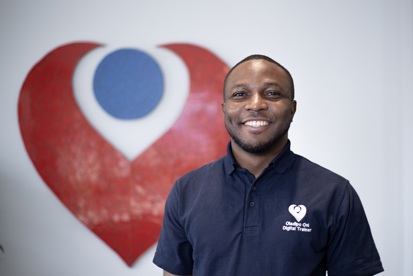
Oladipo Oni, digital trainer“For me, digital training is not just about teaching tools. It is about giving people the confidence to use them to make a difference.”
Lucy Davies, radiographer"I wanted a career where I was able to help people whilst combining science and working with advanced complex technology, so radiotherapy seemed like the perfect choice.”
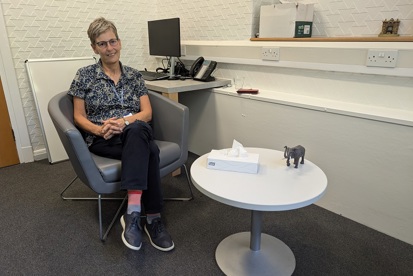
Anne Crook, counsellor“A cancer diagnosis can take over absolutely everything, and what counselling can do is help patients to get to a place where cancer is one part of their lives, not their whole life."