Current studies
AMMO
A randomised phase 2 study of ASTX727 versus best supportive care in MDS/MPN Overlap Syndromes
CPCR are conducting a sub-study as part of the wider AMMO trial. The patient experience sub-study will use mixed-methods research to gain further understanding of the wider challenges of conducting early phase clinical trials in an older patient cohort, through evaluation of patient experience from screening through to withdrawal from trial/trial end.
The AMMO sub-study involves:
- Measurement of patient experience (PREM-ECM-Prior) at trial entry and during the trial (PREM-ECM-During) at end of cycle 6 and at 12 months
- Longitudinal interviews with patients focusing on trial experience and support needs at trial entry, end of cycle 6 and at 12 months. We will also interview patients who decline to take part or withdraw during trial participation.
The use and development of Patient Reported Outcome Measures (PROMs) in the Adoptive Cell Therapy (ACT) setting
This work aims to put the patient at the centre of future trials and aid regulatory approval of studies, looking to reduce time and cost during setup. We will contribute to the overall understanding, implementation and evaluation of PROMs for patients receiving ACT. The primary objectives of the study are:
- To develop an ACT-specific PROM to assess quality of life and symptomatology
- To determine if the same questions can be applied across the different stages of the ACT treatment and follow-trajectory or if a modular approach may be required
- To develop guidelines/recommendations for the use of PROMs in ATMP trials
iPREFER
Patient experiences and preference of treatment for multiple myeloma
iPREFER is a qualitative study focused on gathering data to inform clinical decision making and clinical pathways for people receiving treatment for multiple myeloma. The study objectives are:
- Understand what matters most to people with multiple myeloma when making treatment decisions
- Explore how experiences have differed across different lines of treatment
- Determine if people with multiple myeloma have any preferences for particular treatments
COMPASS
CPCR are providing data entry support to a quality-of-life sub-study of COMPASS, which is an observational cohort study investigating the role of regular community-based blood sample collection to monitor for disease recurrence in patients after lung cancer surgery.
Qualitative exploration of Head and Neck cancer Patient Reported Experience of Radiotherapy With focus on Restriction Anxiety and ‘Claustrophobia’
CPCR are providing support to H&N-PRER-RAC, which is a non-interventional study using interviews to explore head and neck cancer patients’ experience of preparing for and completing radiotherapy utilising an immobilisation mask.
This work will generate items for use in a screening tool for validation in later work.
Publications
- A pragmatic qualitative study to explore women's and clinicians' experience of access to systemic anti-cancer therapies for the treatment of secondary breast cancer
- Geographic and sociodemographic access to systemic anticancer therapies for secondary breast cancer: a systematic review
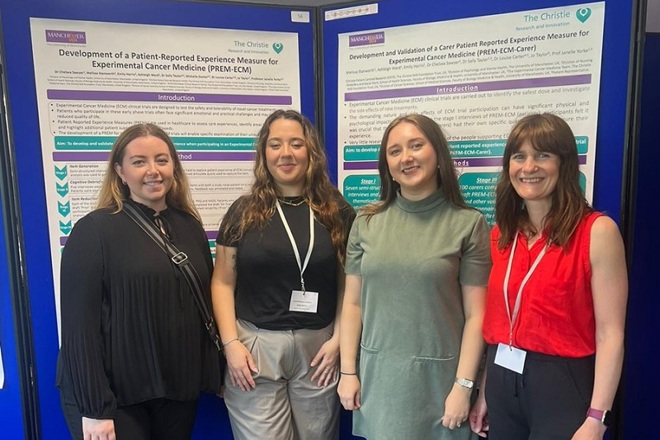
- Development and validation of a patient reported experience measure for experimental cancer medicines (PREM-ECM) and their carers (PREM-ECM-Carer)
- Advanced Ovarian Cancer Patients’ Experiences of Surgical Treatment: A Qualitative Analysis
- The development and validation of a needs assessment tool for use with YOUng adult survivors of a CentrAl Nervous system tumor (YOU-CAN)
- The illness burden of severe asthma contrasted to people with mild-to-moderate asthma: a qualitative study
- A systematic review of the effectiveness of decision making interventions on increasing perceptions of shared decision making occurring in advanced cancer consultations
- Patient-reported outcomes and experiences from a prospective cohort study of older patients with cancer on checkpoint inhibitors: The ELDERS study
- Examining the Effectiveness of Electronic Patient-Reported Outcomes in People With Cancer: Systematic Review and Meta-Analysis
- Correction: Patient‑reported outcome (PRO) instruments used in patients undergoing adoptive cell therapy (ACT) for the treatment of cancer: a systematic review
- Understanding the experiences of lung cancer patients during the COVID‑19 pandemic: a qualitative interview study
- Enhanced supportive care: prospective cohort study of oncology patients and caregivers
- Measurement Properties of Patient-Reported Outcome Measures for Adolescent and Young Adult Survivors of a Central Nervous System Tumor: A Systematic Review
- The experience of patients with lung cancer during the COVID-19 pandemic and its importance for post-pandemic outpatient cancer care planning: A cross sectional study exploring the roles of age and frailty
- Assessing the Acceptability of Home Blood Monitoring for Patients With Cancer Who Are Receiving Systemic Anticancer Therapy From a Patient, Caregiver, and Clinician Perspective: Focus Group and Interview Study
- Patient‑reported outcome (PRO) instruments used in patients undergoing adoptive cell therapy (ACT) for the treatment of cancer: a systematic review
- Understanding the impact of radiotherapy related insufficiency fractures and exploring satisfaction with two existing patient reported outcome measures: A qualitative interview study
- Experiences and Unmet Needs of Adolescent and Young Adult Survivors of a Brain Tumor (Aged 15–39 Years)
- Support and information needs for patients with non-small cell lung cancer receiving concurrent chemo-radiotherapy treatment with curative intent: Findings from a qualitative study
- Respiratory distress symptom intervention for non-pharmacological management of the lung cancer breathlessness-cough-fatigue symptom cluster: randomised controlled trial
- EPIC: an evaluation of the psychological impact of early-phase clinical trials in cancer patients
- Prognostic value of patient-reported outcome measures (PROMs) in adults with non-small cell Lung Cancer: a scoping review
- Oncology patients’ experiences in experimental medicine cancer trials: a qualitative study
- RadBone: bone toxicity following pelvic radiotherapy – a prospective randomised controlled feasibility study evaluating a musculoskeletal health package in women with gynaecological cancers undergoing pelvic radiotherapy
- Impact on quality of life from multimodality treatment for lung cancer: a randomised controlled feasibility trial of surgery versus no surgery as part of multimodality treatment in potentially resectable stage III-N2 NSCLC (the PIONEER trial)
- Access to systemic anti‑cancer therapies for women with secondary breast cancer— protocol for a mixed methods systematic review
- A prospective cohort study on the safety of checkpoint inhibitors in older cancer patients e the ELDERS study
- Bridging the divide: the adjustment and decision-making experiences of people with dementia living with a recent diagnosis of cancer and its impact on family carers
- Evaluation of the safety and effectiveness of prostate-specific antigen (PSA) monitoring in primary care after discharge from hospital-based follow-up following prostate cancer treatment
- Patient and professional experiences of palliative care referral discussions from cancer services: A qualitative interview study
- Exploring the experiences of patients, general practitioners and oncologists of prostate cancer follow-up: A qualitative interview study
- Introducing magnetic resonance imaging into the lung cancer radiotherapy workflow - An assessment of patient experience
- The Role of e-Health in the Delivery of Care for Patients with Hematological Cancers: A Systematic Literature Review
Research grants
Christie Patient Centred Research has been successful in securing funding grants for projects from a wide variety of sources such as:
- Innovate UK
- NIHR - Research for Patient Benefit
- Manchester Academic Health Science Centre (MAHSC)
- NIHR Manchester Biomedical Research Centre
- Lung Cancer Nursing UK
- The Christie Charity
- Greater Manchester Cancer
- Entia
- CellCentric Limited
- GSK Pharmaceuticals
- Roche
As well as funding aligned to the NIHR clinical academic pathway to support Christie clinical staff transition into a career in research.