
Graham Caveney, a 61-year-old author and journalist from Accrington, has seen his advanced food pipe (oesophageal) cancer shrink by 50% thanks to a drug trial at The Christie.
Unlike other trials, which are designed for a disease group, such as breast, prostate or lung, the phase 1/2 PETRA trial is trialling drugs that target specific DNA changes in multiple solid tumour types.
The PETRA study is currently open to recruitment. It’s a commercial clinical trial sponsored by AstraZeneca and is being carried out at 68 locations across the world. The aim is to see if experimental treatment with PARP inhibitor, AZD5305, alone, or in combination with another anti-cancer drug, is safe, tolerable, and has anti-cancer activity in patients with advanced solid tumours. The UK Chief Investigator is Dr Adam Sharp at The Institute of Cancer Research, London and Royal Marsden NHS Foundation Trust.
PARP inhibitors work by stopping cancer DNA from repairing itself. AZD5305 is different from currently available PARP inhibitors as it has been shown to more selectively target certain PARP proteins.
Graham, who now lives in Nottingham, was diagnosed in 2020 after noticing that he was losing a lot of weight. He was referred to his local hospital, where he had an endoscopy and was diagnosed with stage 4 oesophagus cancer that had spread to his liver.
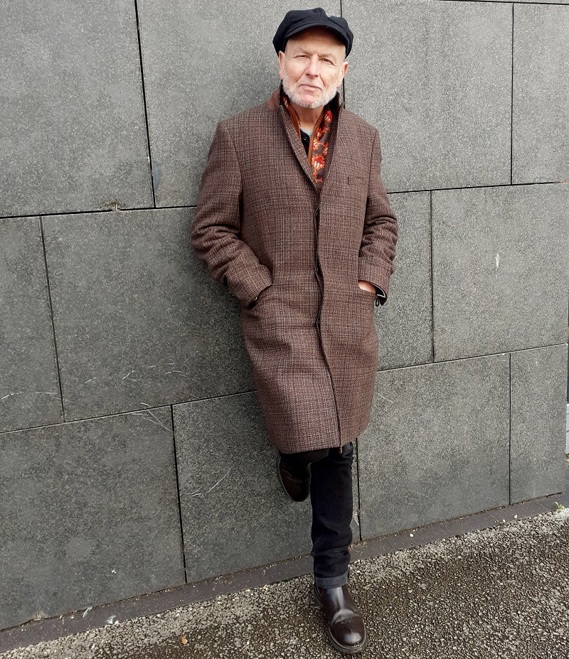
“I was told that I could only have a year to live, which was devastating,” he says. “I had standard treatment, which worked for a while, but towards the end of last year I got ill and was rushed to hospital, where they told me that the treatment had stopped working and that I was quickly running out of options.
“Writing about my experience was the way I tried to understand what was happening to me. My book, ‘The Body in the Library’, came out at the end of last year and, to be honest, I wasn’t sure if I was going to see it being published. I had spent my life working to deadlines, but now my body had become its own deadline,” he says.
Everything changed for Graham when he was offered a place on the PETRA trial. He had a novel drug called AZD5305 in combination with Trastuzumab Deruxtecan, which targets the HER-2 protein that’s present in his tumour. He was treated at the National Institute for Health and Care Research (NIHR) Manchester Clinical Research Facility (CRF) at The Christie.
“It was touch and go whether I would get on it first, as I was very ill the first time they did the screening. Luckily, I was OK the second time. I started on the trial in January and by April, my tumours had shrunk by 50%. I wasn’t in nearly as much pain, my digestion was improving, and I had more energy. All my scans since have been stable,” he says.
Graham has since had to come off the trial as he was having breathing difficulties – a rare side effect of the treatment. He and is still stable and remains positive about his situation.
“When I was younger, the word cancer was said in hushed tones, but now, thanks to advances in treatment, more and more and more people like me are living well with and beyond cancer,” Graham says.
His consultant, Dr Weaver is also optimistic.
‘We have seen a significant reduction in Graham’s tumour, his condition has stabilised, and we may now be able to offer further treatment if the tumour starts to grow again. A few years ago, a trial like this simply wouldn’t have existed, as we didn’t know as much about the biology of tumours as we do today. Because of this, the PETRA trial and others like it are turning research on its head by grouping patients by the characteristics of their tumour rather than by disease group. By doing this work, we’re hoping to open up new treatments to patients who currently have very few options.”
Any patients interested in taking part in clinical trials should discuss this option with their consultant or GP. Not all patients will fit the criteria for a specific trial. While clinical trials can be successful for some patients, outcomes can vary from case to case. More information about taking part in clinical trials can be found on our taking part in studies and trials page.